

Singapore Airlines premium economy vs business: when is the bed worth it?
A better meal is pleasant. A different sleeping position can change the next day. Put those two benefits in the right order before paying for an upgrade.
Flight reviews32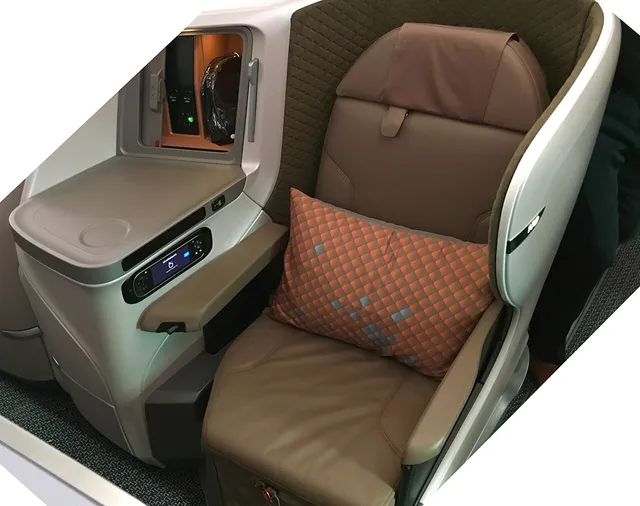
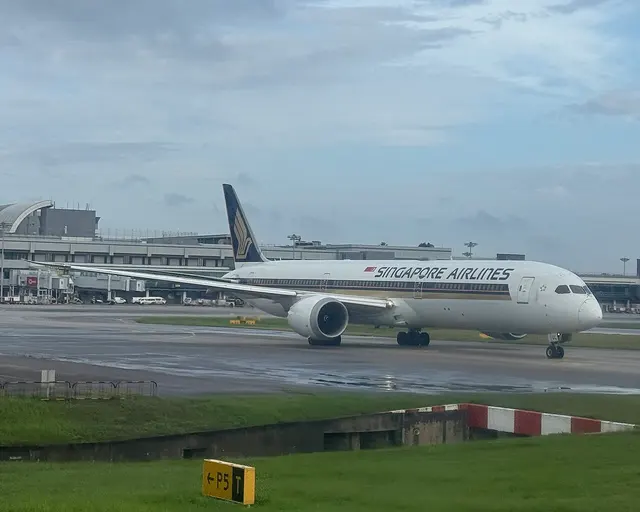
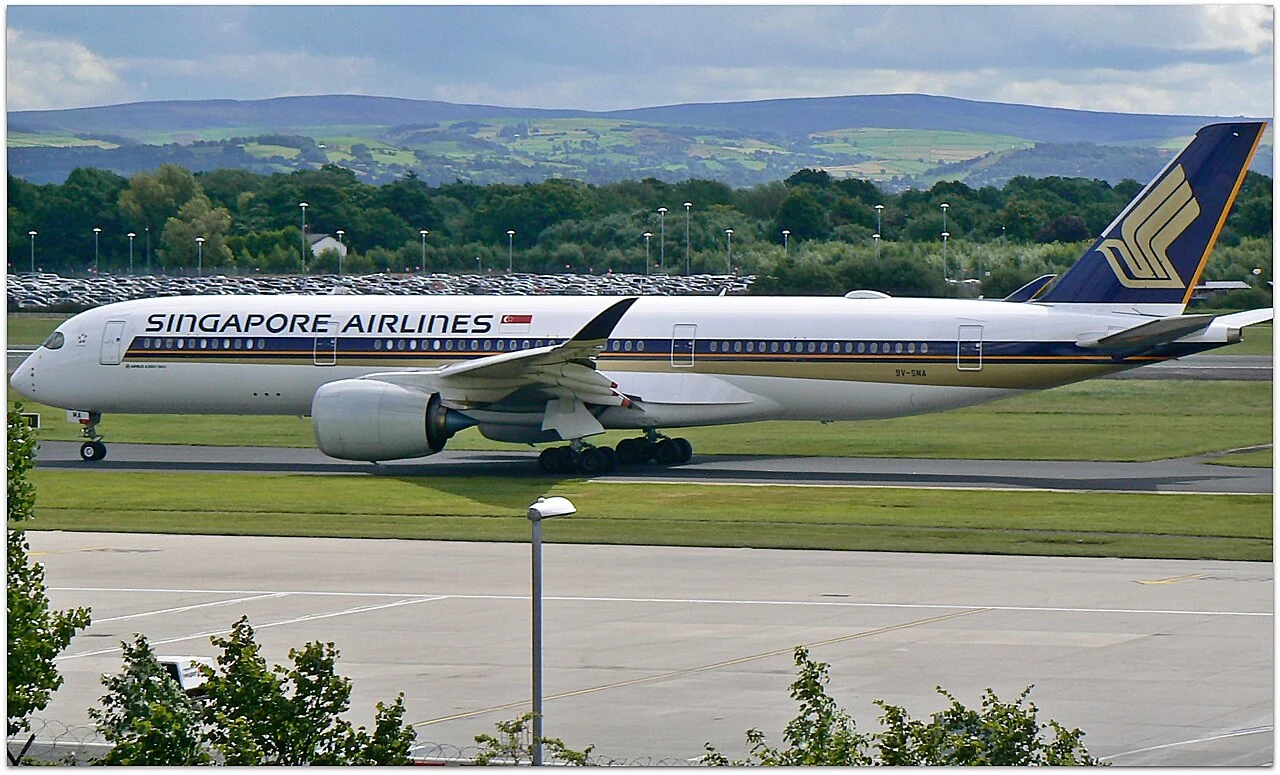
Premium economy improves seated comfort. Business buys a flat sleeping surface and individual aisle access on the A350/777 products compared here. The value depends on when you need to sleep.
01Start with the position you can sleep in
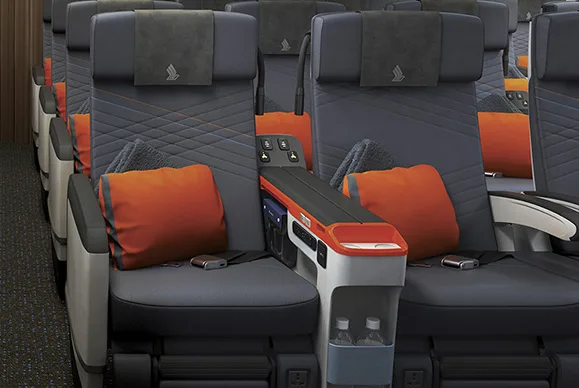
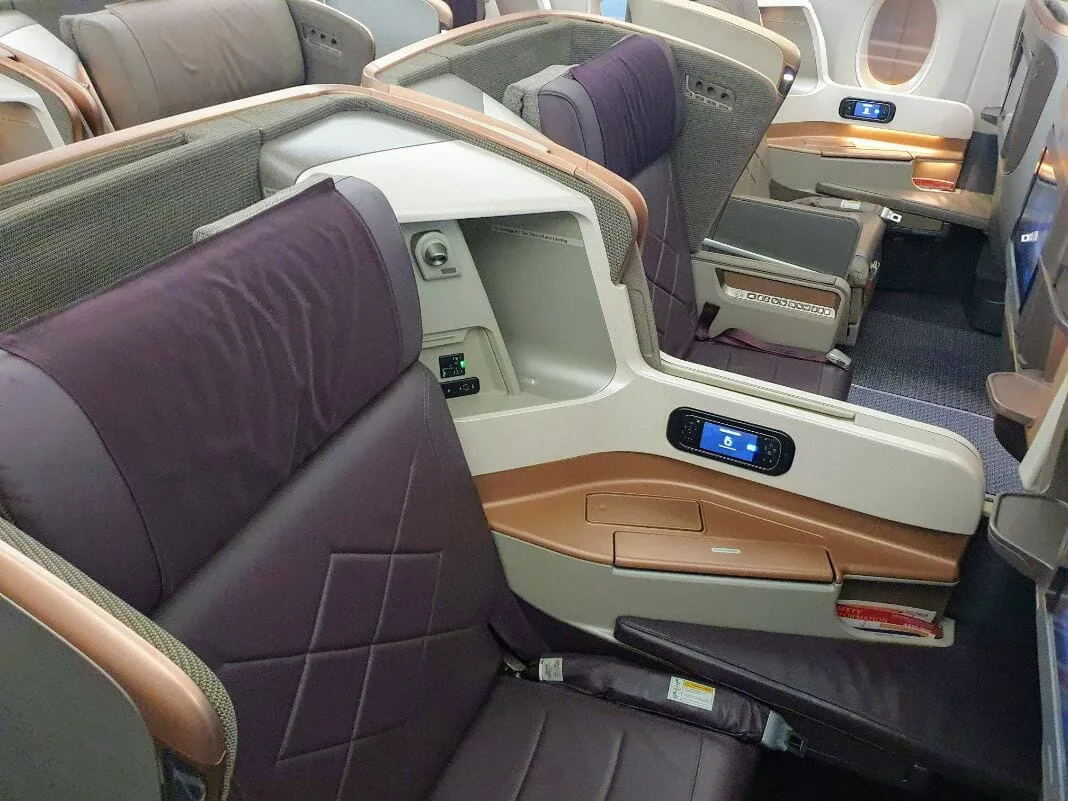
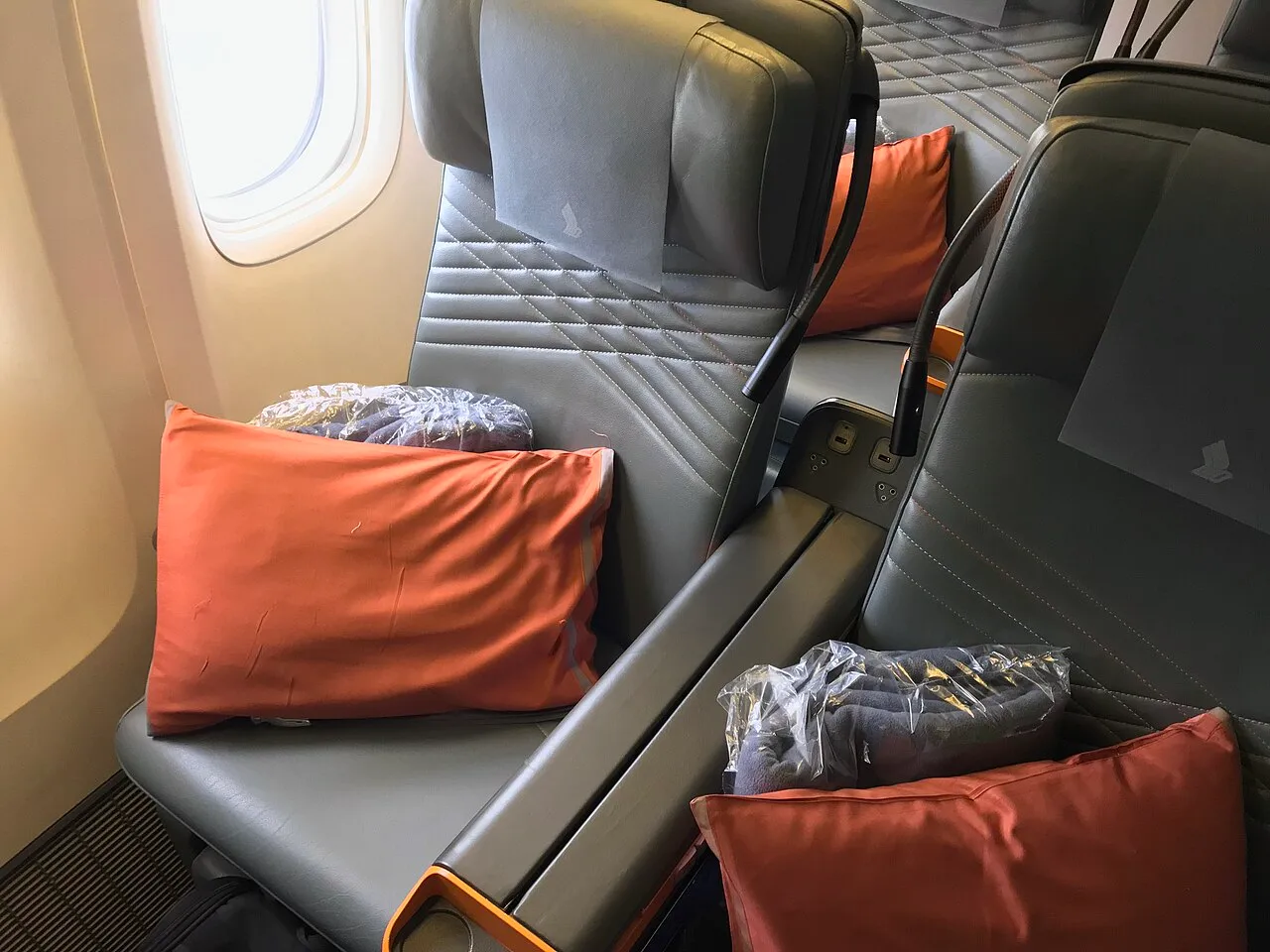
Premium economy is a more comfortable seat, with a calf rest, footrest and additional room. It remains a reclining seat. Business class on the long-haul A350 and 777 products adds a flat bed and direct aisle access. That is the central comparison. Champagne, menus and amenity pouches are secondary if your reason for upgrading is arriving rested.
| Priority | Premium economy | Business on the A350/777 compared here |
|---|---|---|
| Resting position | Recline with leg support | Flat bed |
| Getting up | Seat position and neighbours matter | Individual aisle access |
| Space while awake | More room than standard economy | Separate personal working and resting area |
| Strongest case | Daytime comfort at a manageable premium | Long overnight sectors where sleep matters |
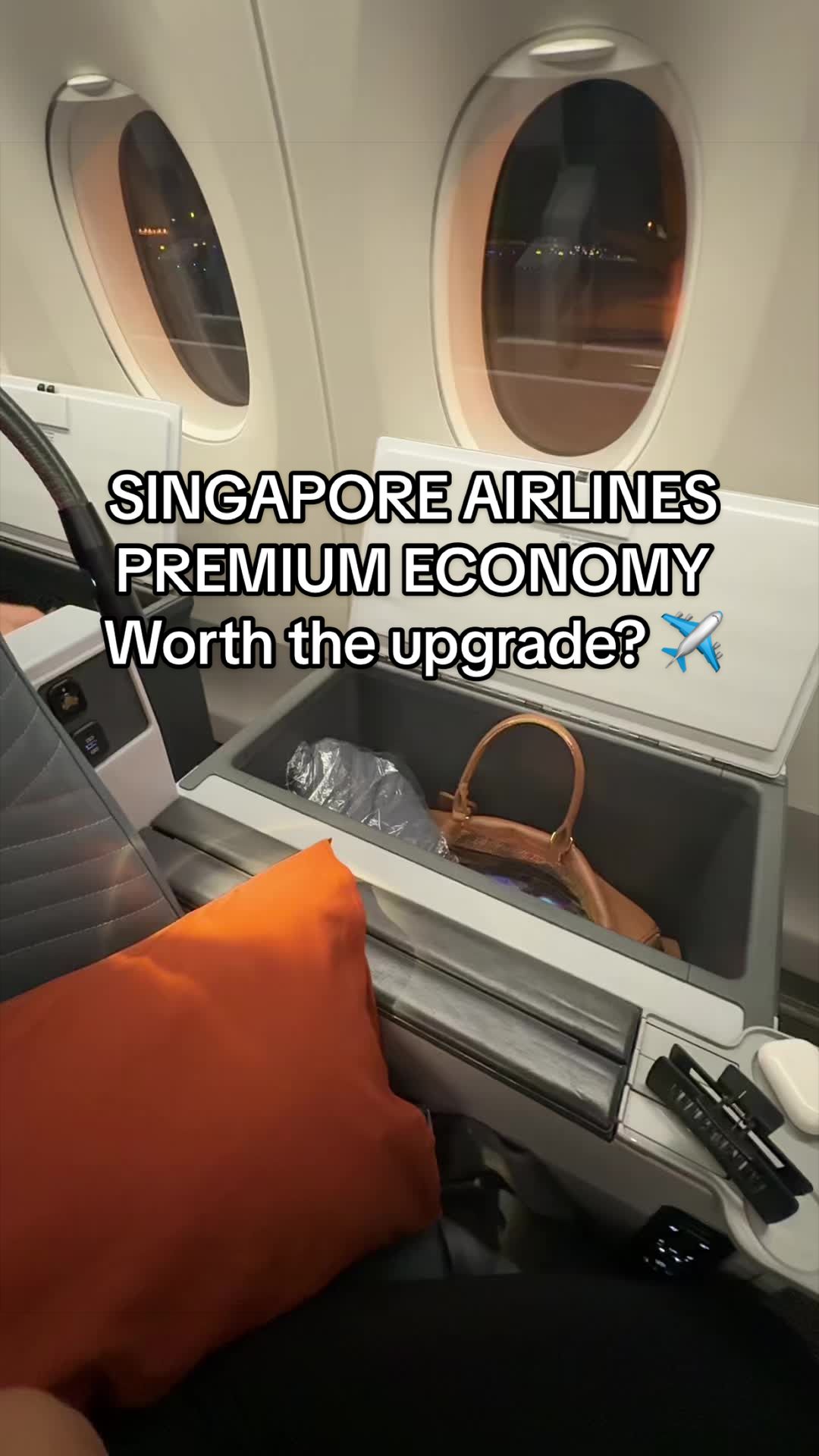
A window seat in premium economy can be appealing for resting your head and avoiding people passing beside you. It can also make getting up more complicated. In business, that particular compromise largely disappears. For someone who regularly gets up during a long flight, this can be worth as much as the bed itself.
Onboard videos2 videos

03Price the overnight sector, not just the round trip
Imagine an outbound overnight journey followed by a relaxed daytime return. A business-class upgrade in one direction may address the important problem without paying for it twice. Reverse the logic if the trip ends with an early workday at home. The useful unit is the flight on which you need rest, rather than an automatic preference for one cabin throughout.
Scheduled flight time is not all sleeping time. Allow for departure, meals and the period before landing. You may prefer to eat at the airport and settle down early. Conversely, if the food and service are part of the holiday, spending several hours awake may be exactly what you want. Either approach can be reasonable; they produce different upgrade values.
04Use an example that reflects your own priorities
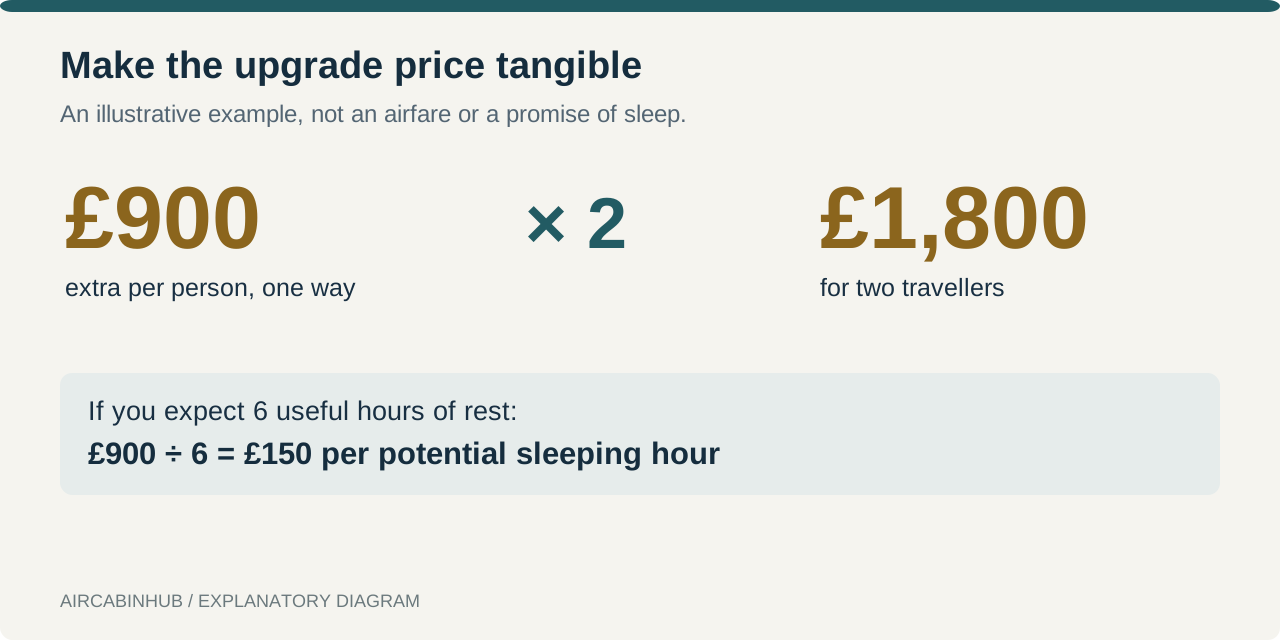
Suppose business costs £900 more than premium economy for one person, one way. That is an illustrative difference, not a quoted fare. For two people, the decision is £1,800. If you expect six useful hours of rest, dividing £900 by six gives £150 per potential sleeping hour. The calculation does not guarantee sleep; it simply makes the trade-off tangible.
Compare that sum with what it displaces in your trip: an extra hotel night, a less demanding arrival day, or a more convenient direct flight. A cheap upgrade with a long connection can be less useful than a slightly better-timed premium-economy itinerary. Compare the itinerary and the cabin together.
05Do not pay business prices just for a menu feature
Singapore Airlines offers Book the Cook choices in premium economy as well as business on eligible services. The existence of a meal pre-order therefore does not establish which cabin you are buying. Look at the actual choices for your departure and let the seat carry the main comparison.
Finally, expand any connecting itinerary. Premium economy is not installed on every aircraft, so a shorter onward sector may be in another cabin. A good comparison lists each flight’s cabin explicitly, the total cash difference and the rest you hope to gain. That gives you a much clearer decision than a generic “is business worth it?” score.
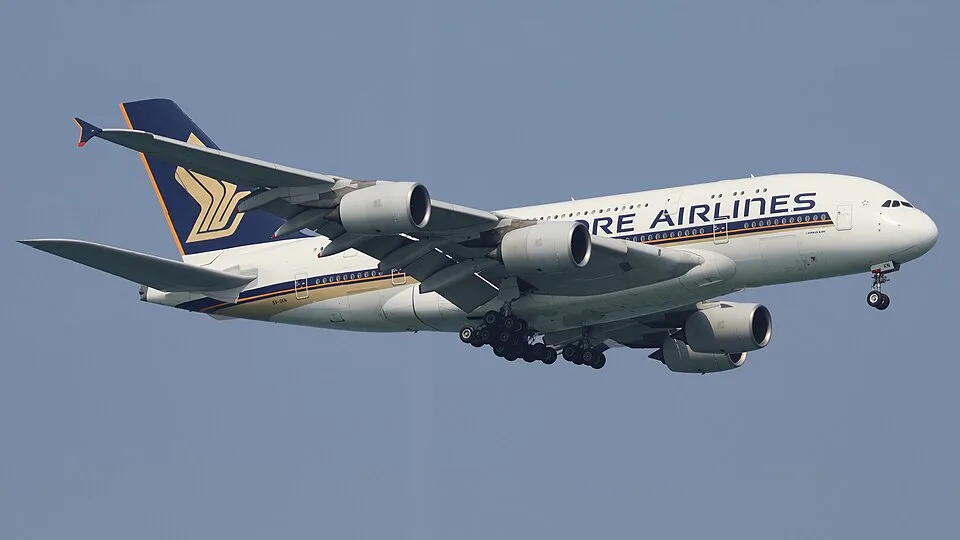 32 flight reviewsRead Singapore Airlines reports with real cabin and meal photographsBrowse reviews
Related flight reviews
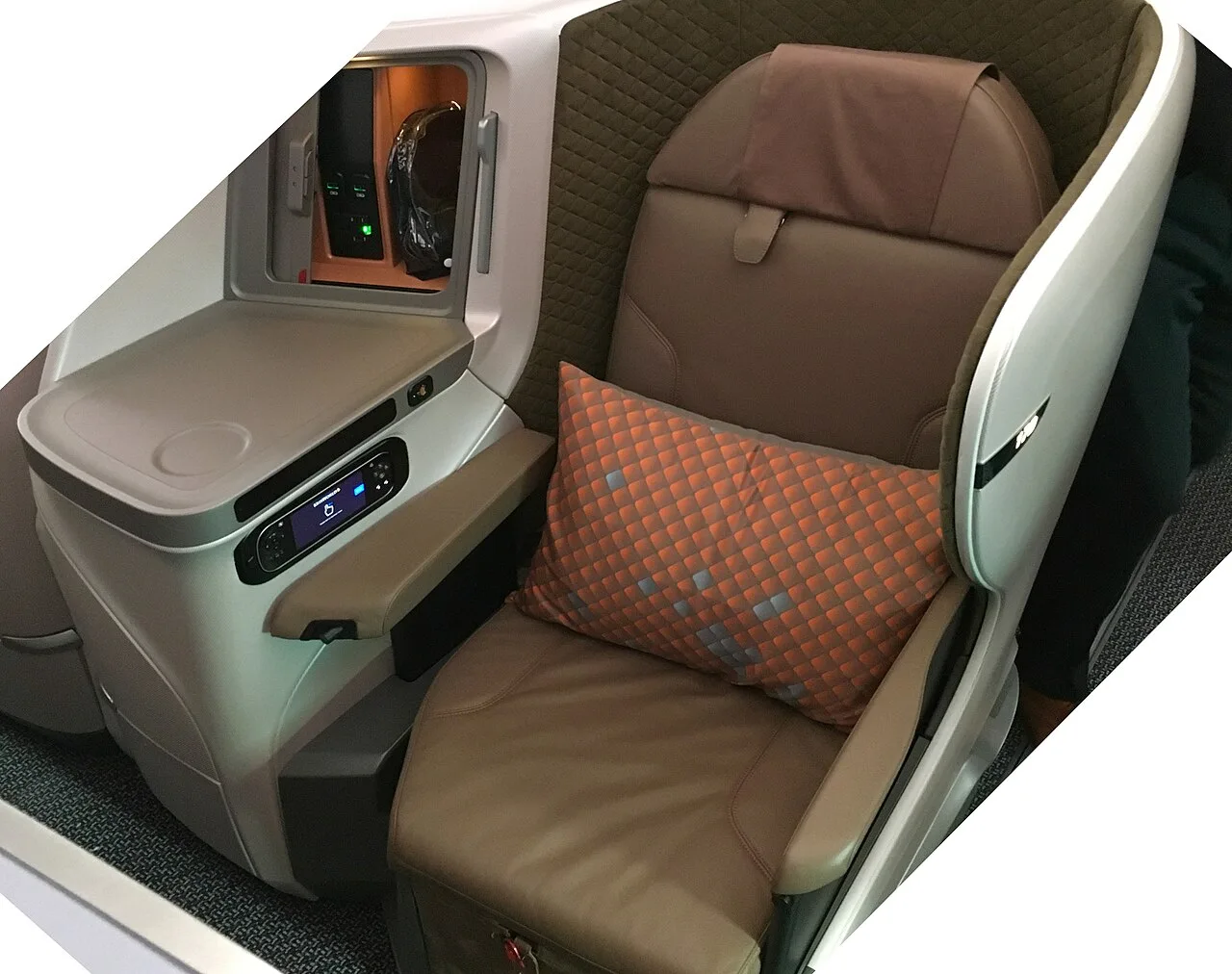 Singapore Airlines
Bangkok Singapore
Boeing 787-10 · Business
Review: Singapore Airlines B787-10 Business Class (BKK-SIN)
The Quiet VacationerRead review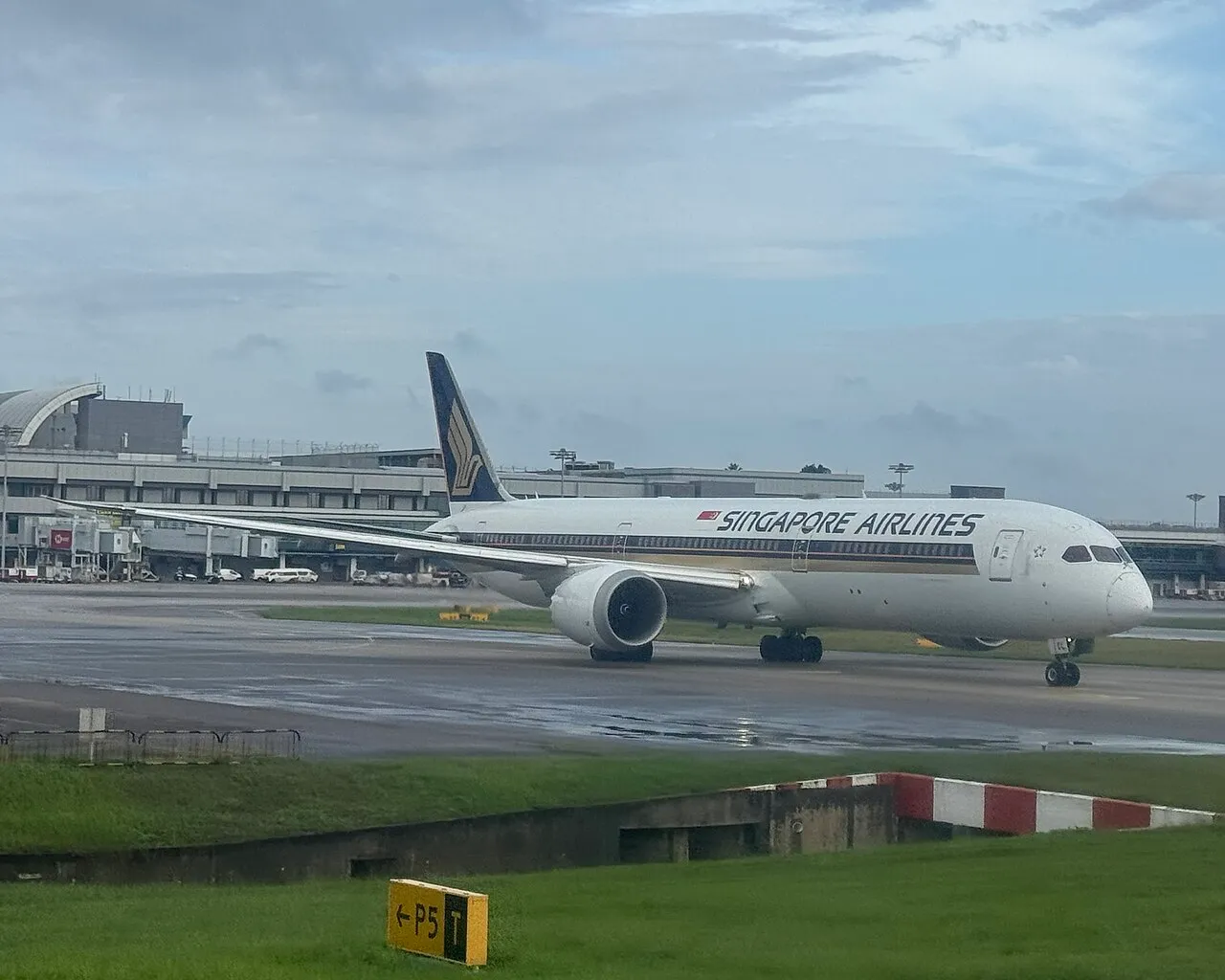 Singapore Airlines
Singapore Bangkok
Boeing 787-10 · Economy
Review: Singapore Airlines B787-10 Economy Class (SIN-BKK)
The Quiet VacationerRead review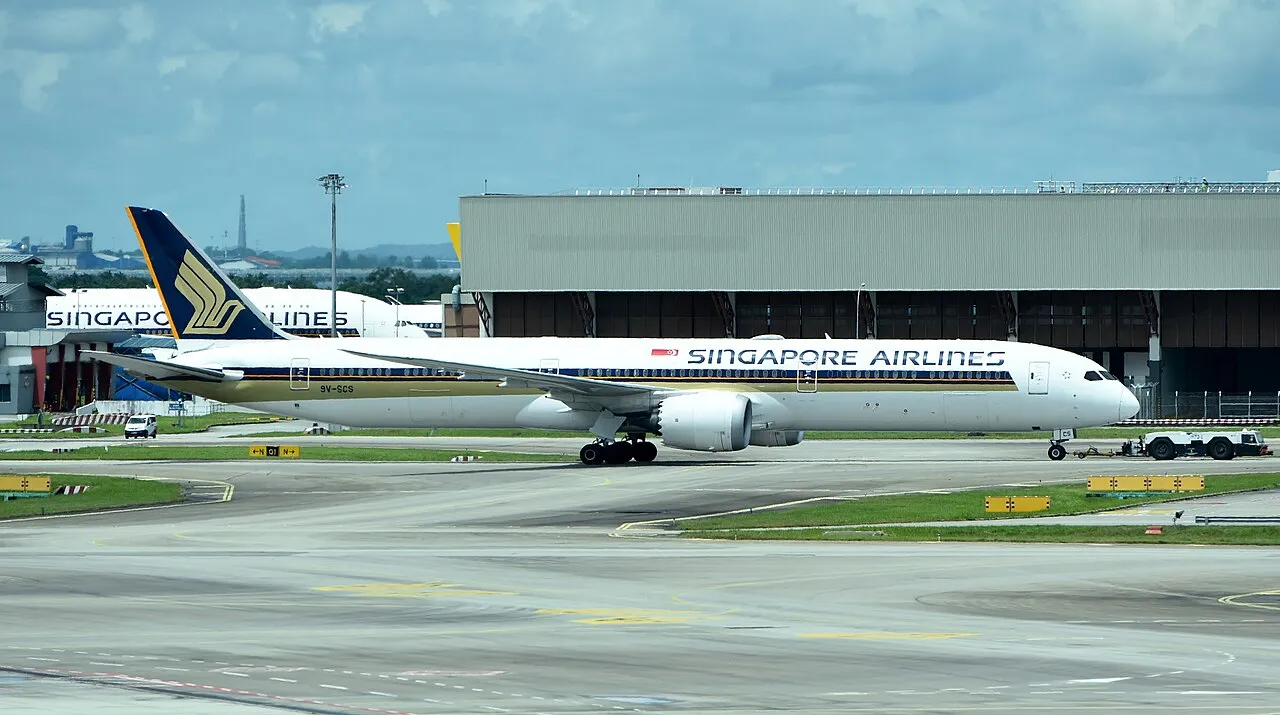 Singapore Airlines
Singapore Ho Chi Minh City
Boeing 787-10 · Economy