
Air Canada Signature Class vs Premium Economy: when is the upgrade worth it?
A wider recliner can transform a daytime flight. An overnight journey asks a different question: how much is lying flat worth to you?
Flight reviews8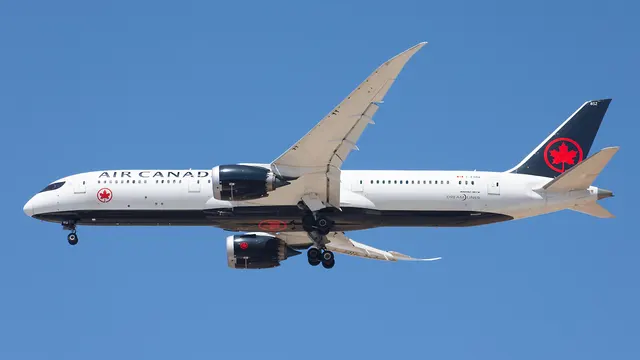
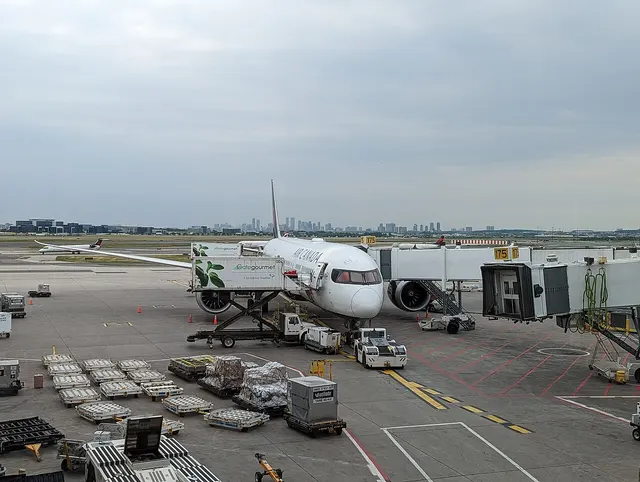
Premium Economy is a strong daytime upgrade when a recliner meets your needs. Choose Signature Class for a confirmed bed on the overnight sector; do not assume every Signature Class ticket includes the Signature Suite lounge.
01Buy the posture you need for the longest part of the flight.
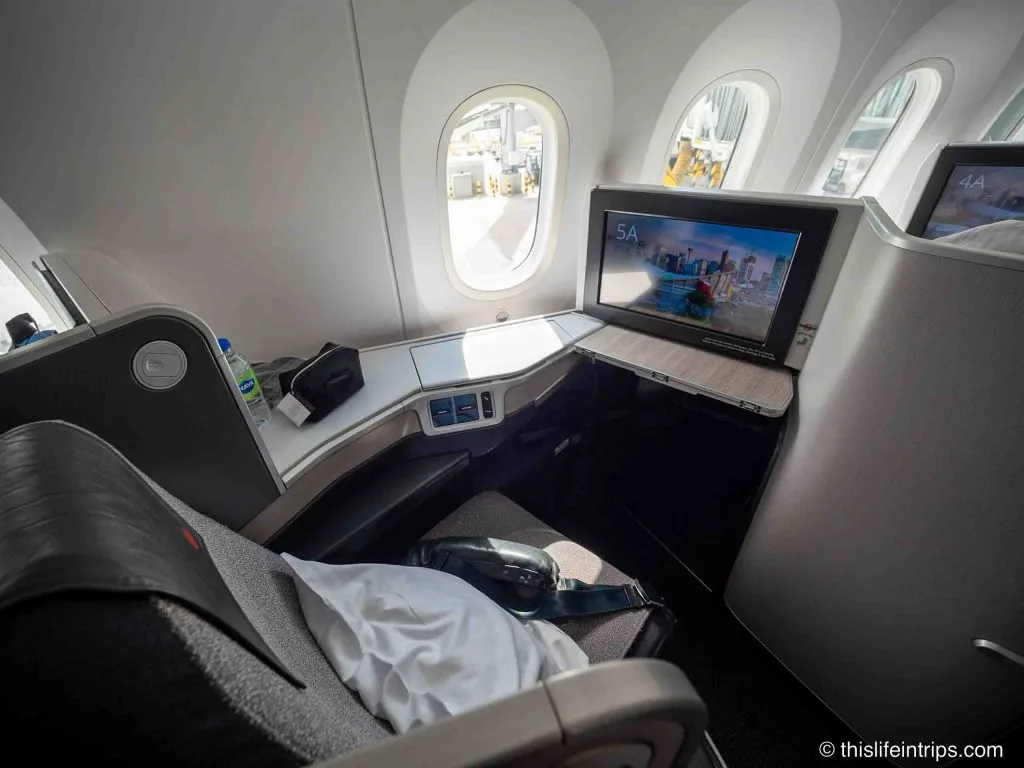
For travellers leaving Canada, the biggest difference between long-haul Premium Economy and Signature Class is not the meal presentation. It is resting in a recliner versus lying flat. Premium Economy gives you a dedicated cabin and more room than economy. Signature Class offers a bed and a more individual space. Neither advantage has the same value on every journey: a daytime return from Europe and an overnight flight to Asia can justify different choices.
| Your priority | Premium Economy | Signature Class |
|---|---|---|
| More room while awake | A wider recliner and dedicated cabin | More individual space and a larger premium experience |
| Sleeping horizontally | Not a flat bed | Fully flat seat on the long-haul product |
| Airport treatment | Priority services; examine the fare’s inclusions | Maple Leaf Lounge access with eligible service |
| Signature Suite dining lounge | Not included simply by choosing Premium Economy | Separate ticket and itinerary conditions apply |
This guide focuses on the long-haul widebody experience. Air Canada also uses premium seats on domestic routes, and its fleet contains different aircraft and products. A photograph from a Vancouver–Toronto flight can help you understand a seat, but it does not establish the catering or ground services on a Toronto–Europe ticket. Keep the aircraft, route and fare conditions together throughout the comparison.
Onboard videos2 videos

03Premium Economy buys useful space, but not every aircraft feels identical.
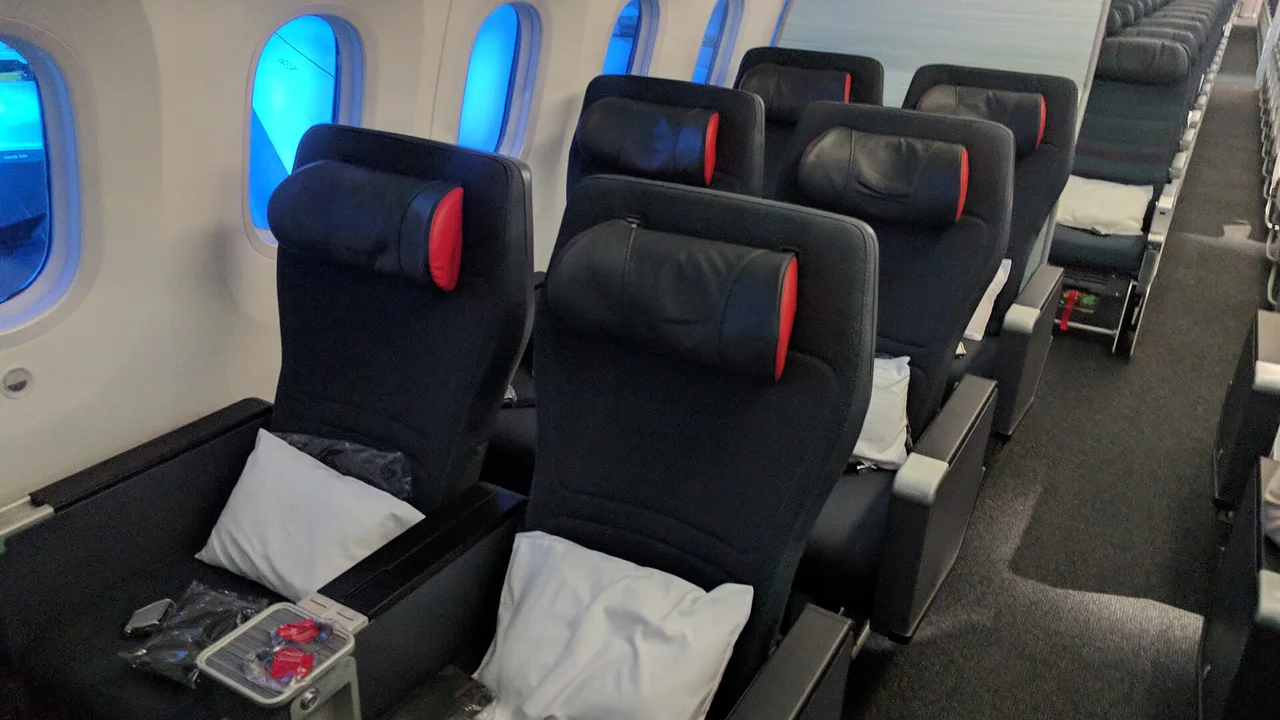

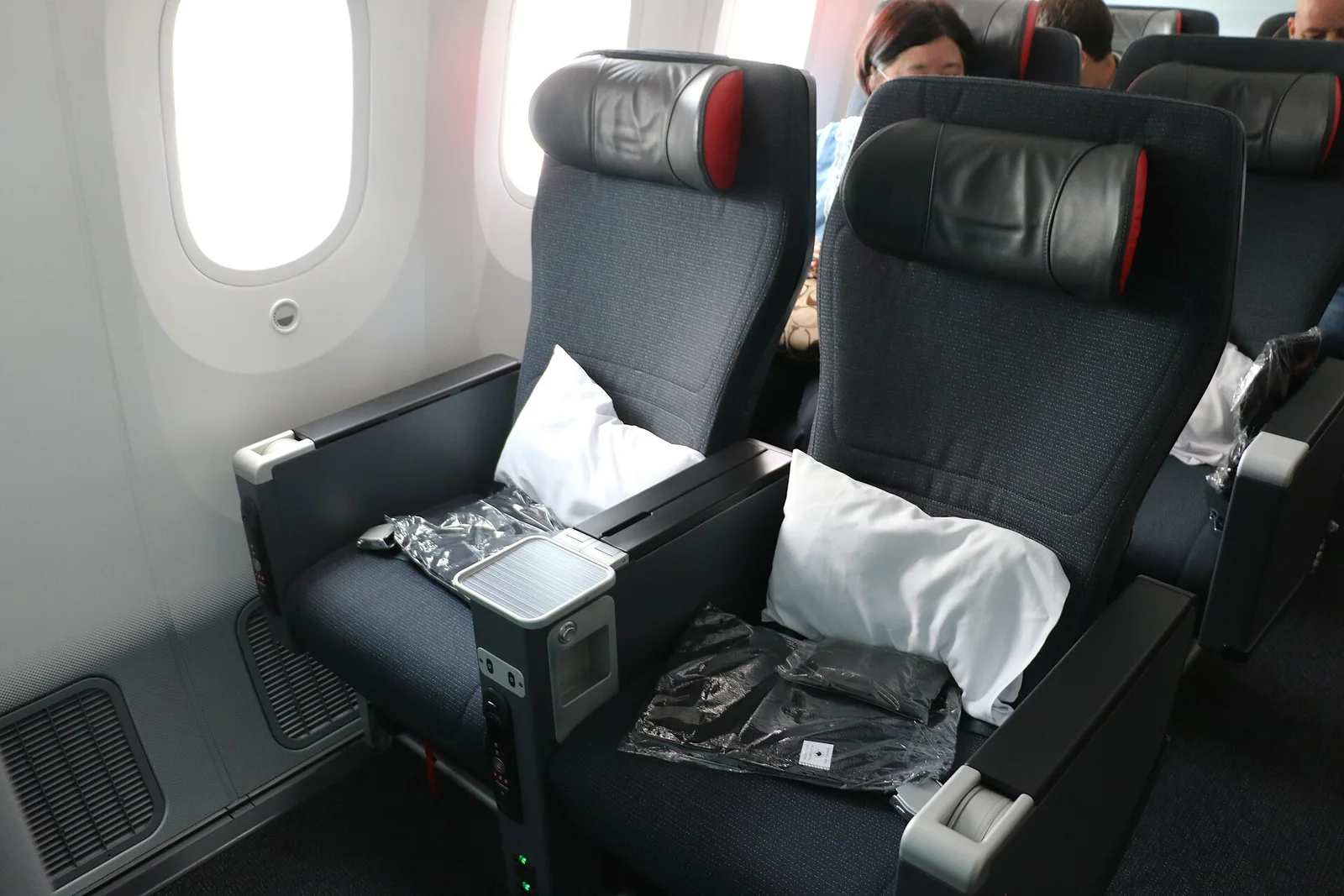
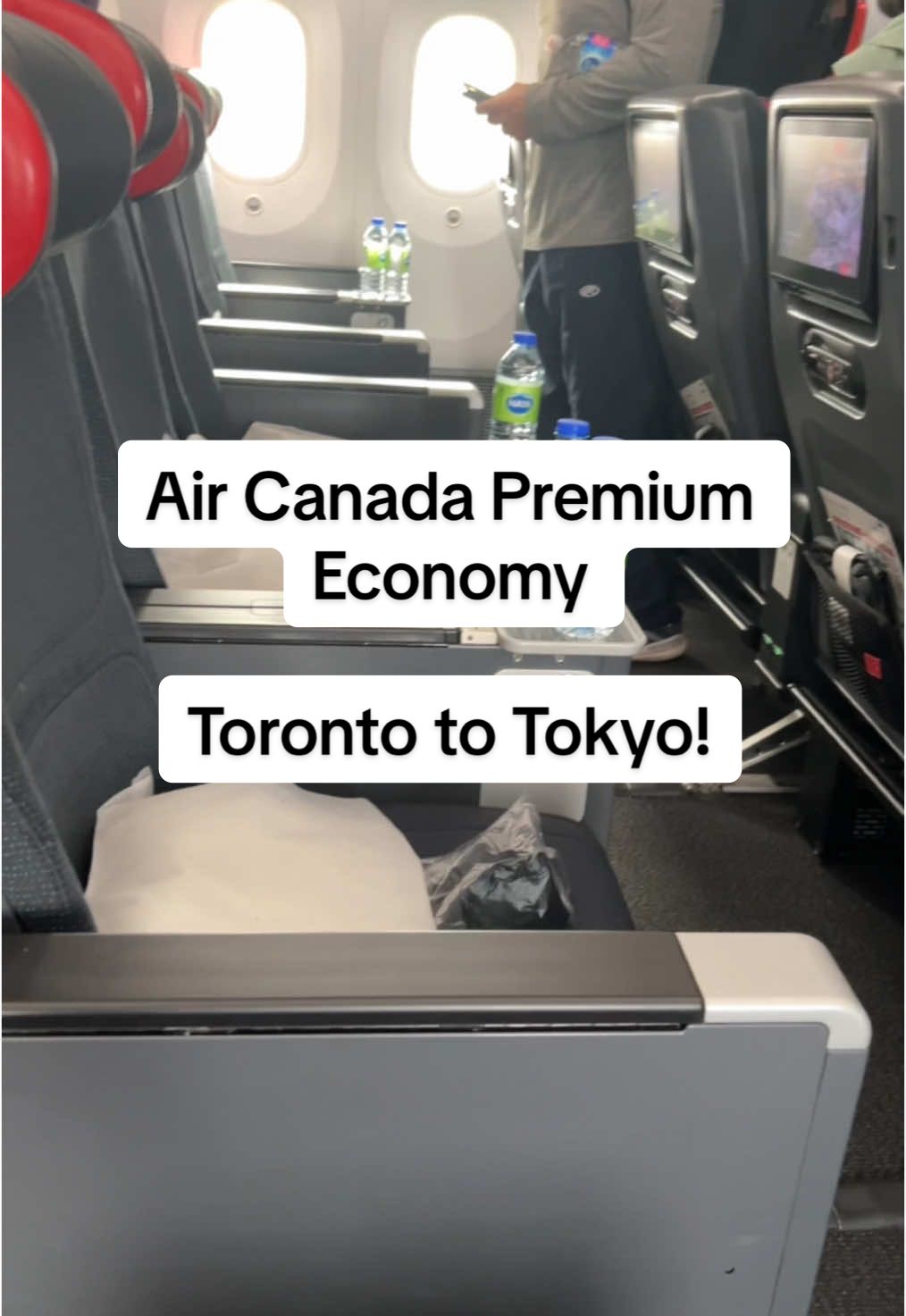
Air Canada’s published Premium Economy specification includes 38 inches of seat pitch and seven inches of recline. The airline lists different widths for different aircraft—for example, 20 inches on the 777, 19.5 inches on the 787-8 and 18 inches on the A330. Those numbers should not be collapsed into one promise for every aircraft or variant. They are also a starting point, rather than a guarantee of how your knees, shoulders or lower back will feel.
Think about the activity you will do for several hours. If you read, watch films and occasionally nap while sitting, a broad armrest and some separation from your neighbour can matter a great deal. If you sleep on your side or need to change position regularly, extra recline may still leave the central problem unsolved. A more expensive recliner remains a recliner.
Photographs with the foot support extended are more useful than a pristine empty cabin alone. Look at where your feet would go, how the tray reaches you and what happens when the person in front reclines. For two people, check whether the available seats give you the pair you want. Paying for a better cabin while ending up apart can be a poor exchange if sitting together is one of your main reasons for upgrading.
04Signature Class changes the night, rather than merely enlarging the chair.
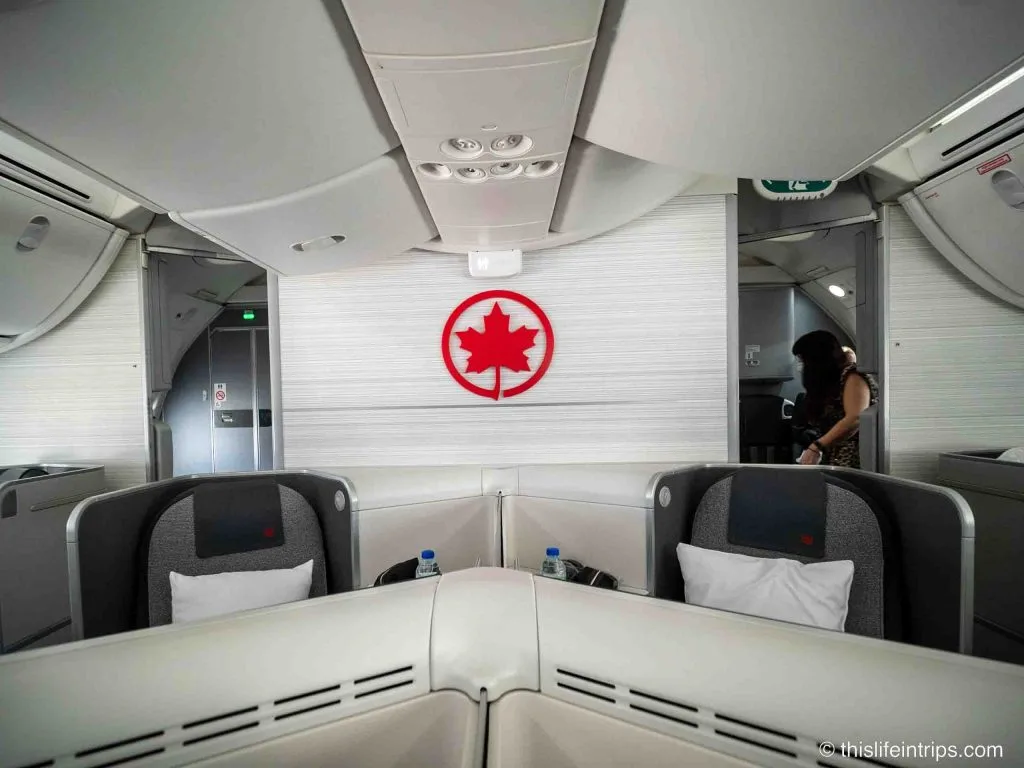
The long-haul Signature product converts to a fully flat bed, with published bed lengths up to 203.2cm and dedicated bedding. That is a substantial change in what you can do onboard. It can be particularly valuable before a working day, a family event or the first day of a short holiday, when arriving tired consumes a large share of the trip.
Still, the seat cannot create time. On a relatively short overnight journey, dinner, settling in and breakfast can leave only a modest sleep window. Decide in advance whether you want the full meal experience or to rest soon after departure. On a very long journey, the ability to alternate between lying down and sitting becomes valuable even if you do not sleep continuously.
Compare your arrival plans, too. If you already have an easy first day and a room available soon after landing, Premium Economy may meet your needs at a much lower total cost. If an early arrival is followed by a full schedule, paying for a bed on that direction alone may have more value than upgrading both directions automatically. This is a practical way to spend on comfort without pretending every premium fare is good value.
05Signature Class is not the same thing as the Signature Suite.

Read the diagram as text
- On board
- Signature Class seat
- Airport
- Separate Signature Suite access rules
- Upgrade ticket
- Do not assume premium-lounge admission
Air Canada Signature Class names the onboard product. The Signature Suite is a separate premium airport lounge with narrower admission rules. The dedicated access page lists eligible paid international fares in booking classes J, C, D, Z and P, and qualifying Aeroplan Business Latitude or First Latitude rewards. It excludes Business Standard and First Standard rewards, upgrades such as eUpgrades, bid and last-minute upgrades, and various partner awards. Read the exact conditions on the ticket you plan to buy.
That distinction matters when comparing a paid business fare, an Aeroplan reward and an upgraded Premium Economy ticket. They can put you in the same onboard seat while producing different ground benefits. If the lounge is an important part of your plan, save the fare name and booking class rather than relying on the word “Signature” in the cabin description.
It also changes the amount you should be willing to pay for flexibility. A higher fare may include conditions or lounge access you value, but those benefits should be assessed individually. A temporary lounge closure reduces the immediate usefulness of that particular benefit; it does not make the bed on the flight disappear. Separating the parts prevents both overpaying and dismissing a worthwhile cabin upgrade for the wrong reason.
06Calculate the premium for two travellers, in Canadian dollars.
Suppose Premium Economy costs C$2,400 per person return and Signature Class costs C$4,000 on comparable flights. For two travellers, the totals are C$4,800 and C$8,000: C$3,200 more for the couple. If both directions are nonstop, that is C$800 for each person on each long-haul sector. These are illustrative totals, not current fares or an Air Canada price prediction.
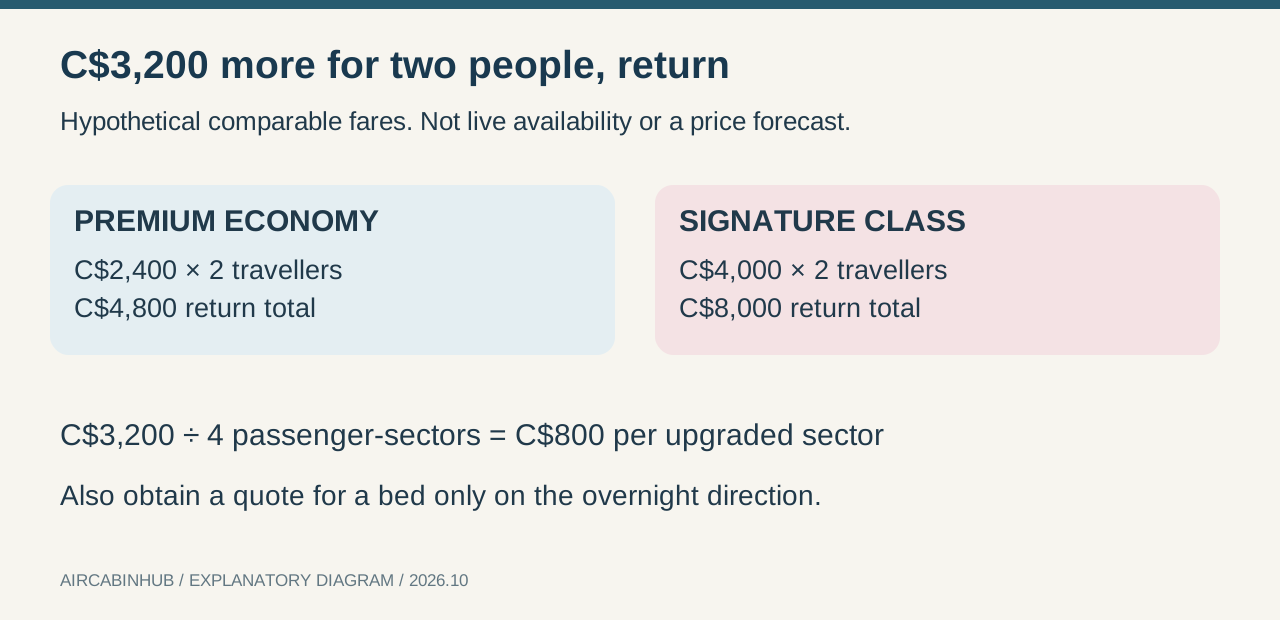
Next ask for a mixed-cabin quote with Signature Class on the direction where sleep matters most. Do not assume the return-trip difference can simply be halved: one-way pricing and fare combinations can change the total. If the mixed quote saves a meaningful amount, you can retain the most useful bed and spend the balance on the rest of the holiday.
For an Aeroplan booking, keep points and cash in separate columns. Compare the same passengers, dates and cabins, then add cancellation and change conditions. An eUpgrade request is not equivalent to a confirmed Signature Class seat. If a bed is essential, evaluate what is confirmed, rather than valuing an uncertain upgrade as though it has already cleared. Canadian transfer and card conditions also need their own terms; US offers should not be assumed to apply to a Canadian account.
07Read a flight review for the evidence it actually contains.
Live and Let’s Fly’s 787-9 Premium Economy report covers a Vancouver–Toronto red-eye. It is useful for the seat and the author’s sleep experience, including the early breakfast timing on a short flight. It is less useful for predicting an international menu. Treat that difference as a way to use the review well, not a reason to discard it.
Read the Vancouver–Toronto Premium Economy review
Look for at least one review of your long-haul cabin and one close look at the competing cabin. Pay attention to the photographed seat, footwell and bedding, then to the author’s route and time of day. A glowing review of a relaxed daytime journey may not answer the question you have about sleeping before an early meeting.
Our recommendation is Premium Economy when sitting comfort is the main upgrade and the fare difference remains useful elsewhere. Choose Signature Class when the confirmed flat bed addresses a real need, especially on the overnight sector. Finish by checking the lounge separately, the total for everyone travelling and the conditions for changing the trip. That gives you a decision based on the journey you will take, rather than the prestige of the cabin name.
Related flight reviews
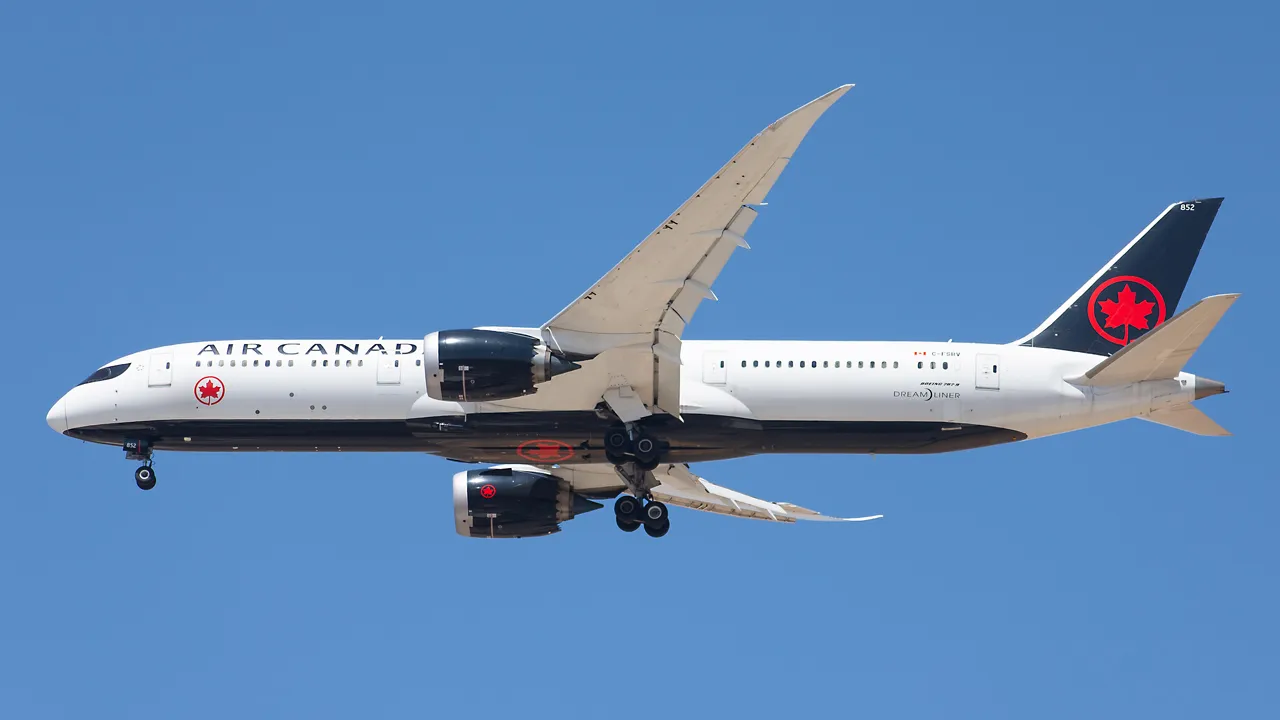 Air Canada
London Calgary
Boeing 787-9 · Business
Air Canada 787 Business Class Review: LHR to YYC (2026)
This Life in TripsRead review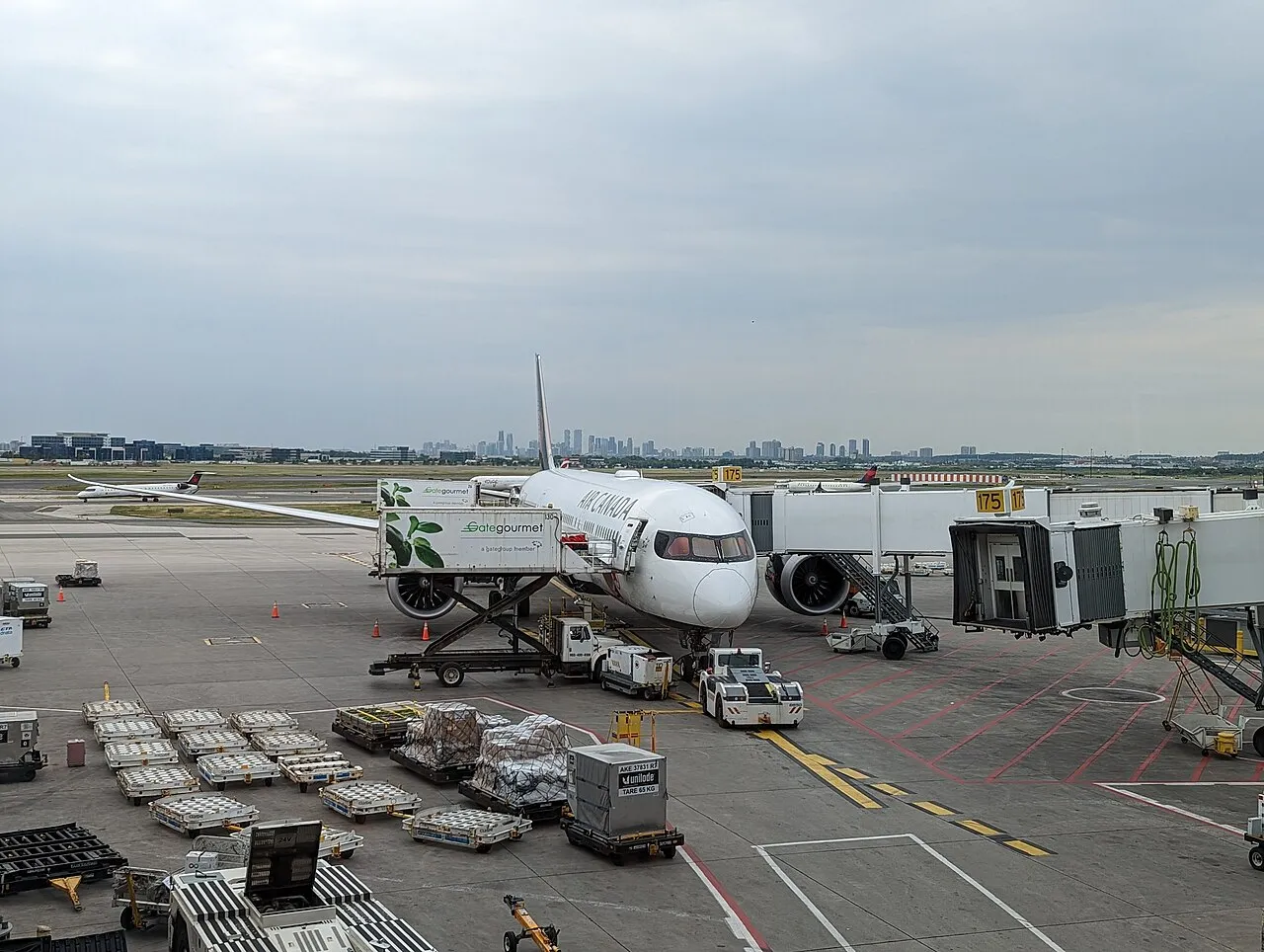 Air Canada
Singapore Vancouver
Boeing 787-9 · Premium economy
Flight Review: Air Canada Premium Economy (Boeing 787-9) from Singapore to Vancouver
Travel While NerdyRead review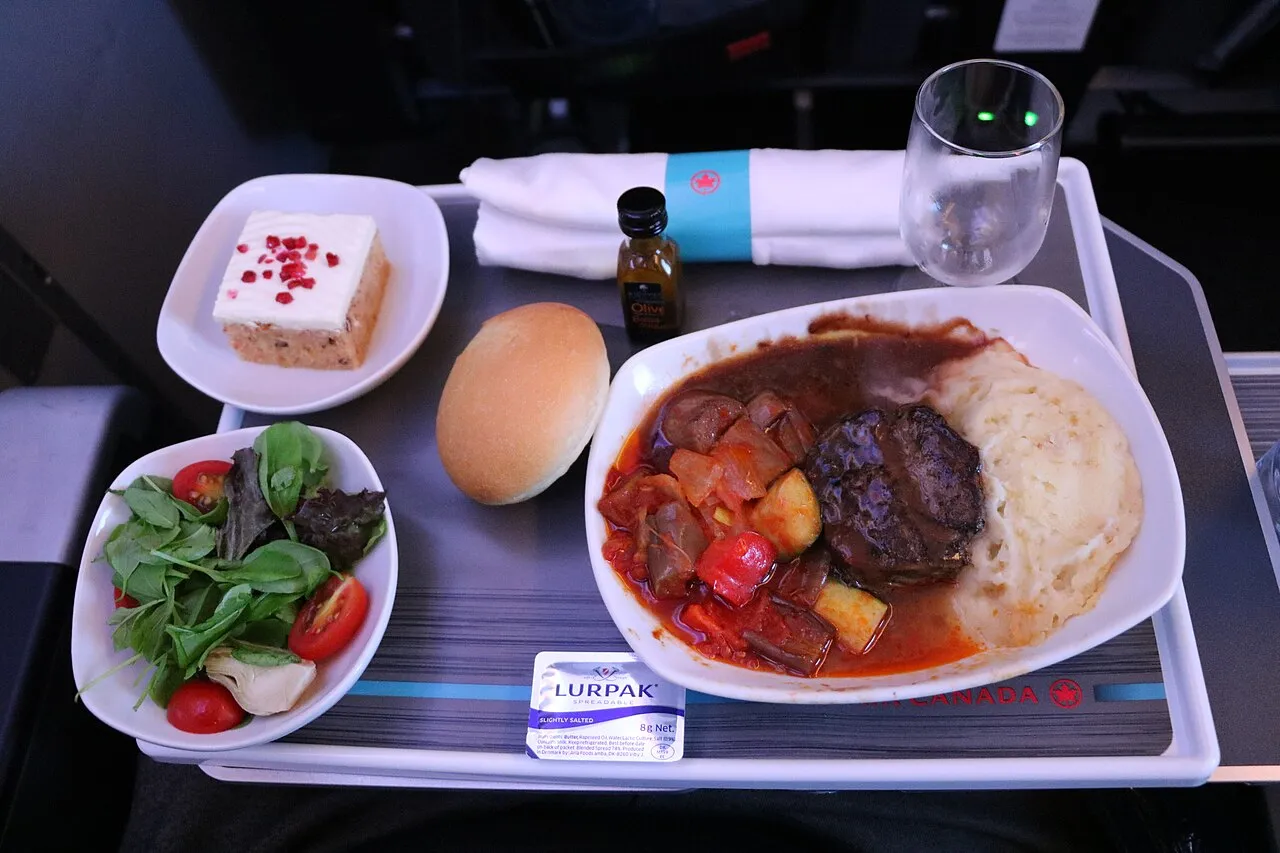 Air Canada
Vancouver Osaka
Boeing 787-9 · Premium economy