
Air Canada vs JAL Business Class: Vancouver–Tokyo
Two ways across the Pacific, with different seats and different ground benefits. The fare rules can be as consequential as the cabin photographs.
Flight reviews5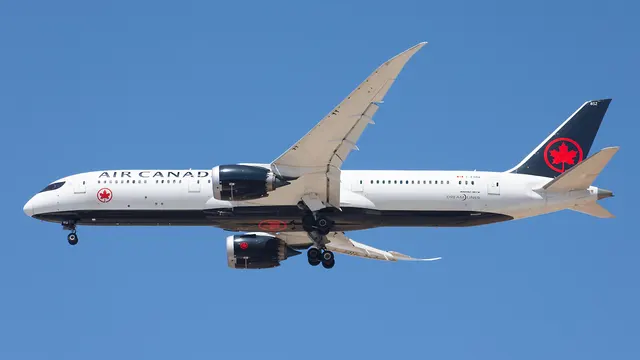
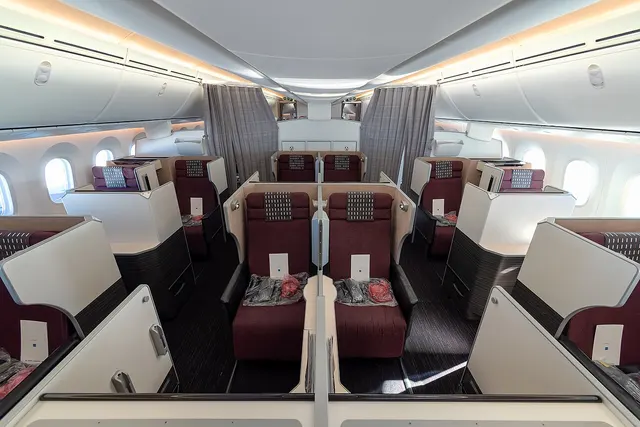
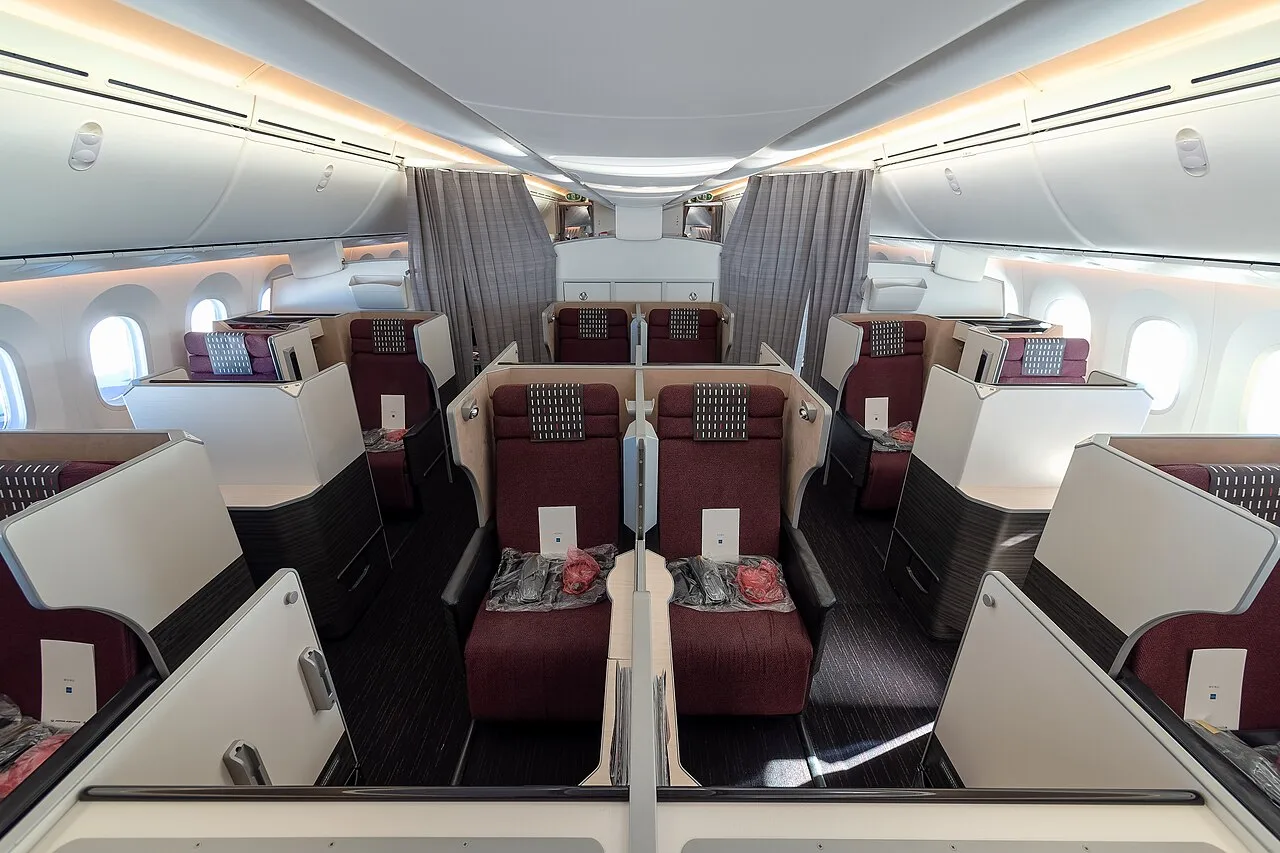
JAL SKY SUITE is attractive if you prefer a forward-facing bed and its Japanese service style. Air Canada Signature is a strong option for a familiar Canadian itinerary, but Signature Suite lounge access depends on the ticket: an upgrade or a standard reward does not automatically include it. Compare the exact flight and fare, rather than treating either brand as one fixed package.
01A business-class ticket is not a single bundle of benefits
For a Vancouver-based traveller, the choice between Air Canada and JAL can appear to be a straightforward contest between two long-haul business cabins. It becomes more interesting once you add the type of ticket, the actual Tokyo airport and the way you intend to spend the flight. A paid fare, a partner award and an upgrade can produce different ground experiences even when they place you in the same seat.
This guide compares Air Canada Signature with JAL SKY SUITE as products to identify on a Vancouver–Tokyo booking. It does not assume that every date or every aircraft carries one identical cabin. JAL’s 787 family in particular has multiple configurations, so the seat map attached to your flight is essential to the comparison.
| Priority | Air Canada Signature | JAL SKY SUITE |
|---|---|---|
| A flat bed and aisle access | Long-haul Signature seating | SKY SUITE offers aisle access even in the 787’s 2-2-2 arrangement |
| Dining before departure at Vancouver | Signature Suite if the fare qualifies | Assess the lounge offered for the actual ticket |
| Forward-facing seating | Check the selected aircraft’s layout | A characteristic of SKY SUITE I |
| A points or upgrade booking | Do not assume Signature Suite access | Identify both the redemption rules and the operating product |
| A smooth journey beyond Tokyo | Compare the entire connection | Compare the entire connection |
For our purposes, a good choice is the one whose benefits you will actually use. Someone arriving in Tokyo for a relaxed holiday might put more weight on food and the enjoyment of the flight. A traveller continuing to a regional Japanese city may prefer the itinerary with a manageable connection, even if the seat photographs are less striking.
Onboard videos2 videos
These first-hand clips show the seat and storage in use; the route and ticket conditions are discussed separately below.



03JAL’s 2-2-2 cabin is not the usual six-abreast compromise
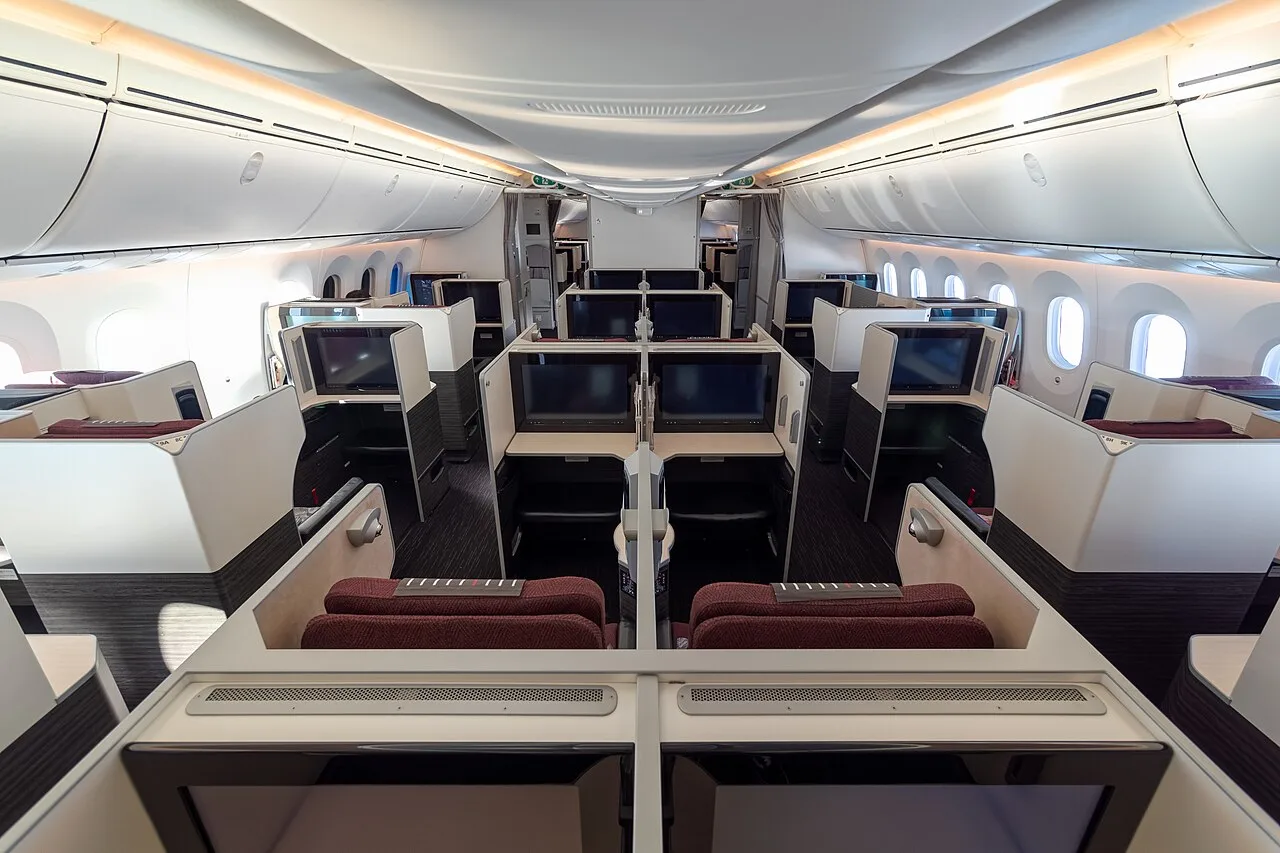
JAL’s official SKY SUITE description confirms direct aisle access for every seat, including the window positions. On the 787, the product uses a 2-2-2 layout rather than the 1-2-1 pattern many travellers associate with modern business class. That does not mean a window passenger must climb over their neighbour. The access path is built into the arrangement.
The trade-off is more subtle than a seat-count comparison. A forward-facing, partitioned space can feel private, but the route into the window seat and the available storage can differ from the adjacent aisle seat. A traveller who repeatedly gets up, carries a camera or needs several items close at hand may prefer a different position from someone who plans to settle into bed for most of the flight.
QUIRROW’s Narita–Vancouver report makes that distinction unusually clear. The author photographed both the window and adjacent aisle positions, preferring the latter’s storage while enjoying the privacy of the former. That is one traveller’s experience on a 787-8, but it identifies a worthwhile question: where will your glasses, phone, headphones and small bag go when the seat is a bed?
The answer matters more than whether the cabin fits a fashionable layout label. For two people, separate access can be helpful when one sleeps and the other reads. For a couple hoping to talk throughout the meal, a high partition or offset seating may be less appealing than the photographs initially suggest.
04The seat and the Signature Suite are separate decisions
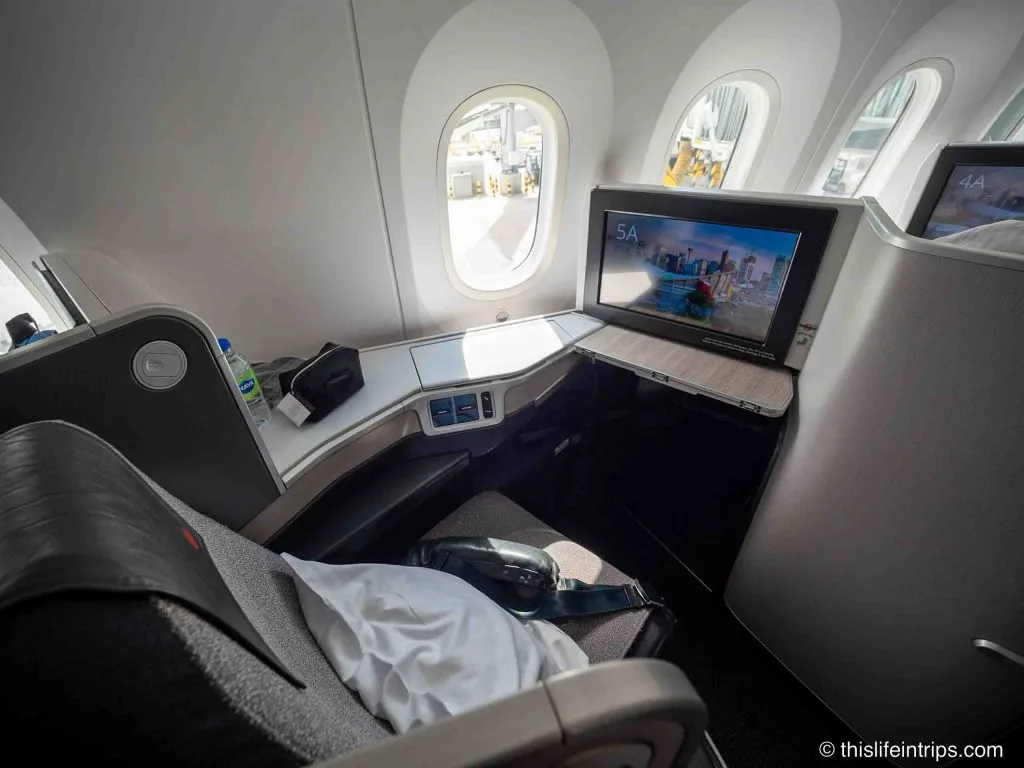
Air Canada’s Signature Service is its long-haul premium experience on relevant widebody aircraft, including flat-bed seating. The Signature Suite is a particular ground facility, with eligibility rules of its own. It should not be confused with a Maple Leaf Lounge or treated as an automatic extra attached to every business-class boarding pass.
At the time of this check, the official Signature Suite page lists eligible original paid bookings in J, C, D, Z and P. For Aeroplan redemptions it specifies eligible Business Latitude Reward or First Latitude Reward bookings. It excludes Business Standard rewards, partner rewards and several upgrade categories, including eUpgrades and bid upgrades. The precise itinerary requirements still apply.
| Booking route | Question to resolve |
|---|---|
| Original paid Signature booking | Does the fare and international itinerary meet the published eligibility? |
| Aeroplan reward | Is it an eligible Latitude reward rather than Standard? |
| eUpgrade, bid or last-minute upgrade | Do not assume the upgraded seat grants Signature Suite access |
| Partner-program award | The official policy excludes partner rewards |
| Travelling with someone in another cabin | Eligible guests cannot simply be invited into the Signature Suite |
That distinction can reverse an apparently obvious recommendation. If an upgrade is an attractive way to obtain a bed, it may still be excellent value without the Signature Suite. But a comparison that praises the lounge while pricing an ineligible upgrade overstates what the traveller will receive. The honest alternatives are “bed with these ground benefits” and “bed with those ground benefits”.
05Tokyo is a city; the arrival airport is a journey detail

Read the diagram as text
- Long-haul arrival
- The airport on the ticket
- Next step
- Hotel area or domestic departure
- Whole journey
- Transfer, baggage and final arrival
A fare search for Tokyo can make airport differences easy to overlook. The relevant comparison is the actual airport on the ticket, followed by the trip to your accommodation or onward flight. Avoid assigning a universal transfer advantage without considering where you are staying. A hotel on one side of the city, a railway connection and a domestic flight all create different priorities.
If you are continuing within Japan, compare the arrival and departure airports on the same booking. A transfer between Tokyo airports adds a ground journey as well as the usual immigration, baggage and check-in considerations. Saving points on the long-haul sector can be less appealing if it creates a difficult connection you would otherwise avoid.
For a Vancouver return, also consider what happens after landing at YVR. A local resident heading home and someone continuing to another Canadian city do not face the same itinerary. The useful question is not which airline has more destinations in the abstract, but whether the actual connection gives you enough margin without consuming an entire additional day.
06What is the extra ground experience worth in Canadian dollars?

Read the diagram as text
- Two return fares
- C$9,600 versus C$10,600
- Lounge value assumed
- C$300 for the couple
- Still to justify
- C$700 in seat, timing or flexibility
Suppose two otherwise acceptable return business-class options cost C$4,800 and C$5,300 per person. For a couple, the difference is C$1,000. These are hypothetical figures for the method, not current Air Canada or JAL fares. The expensive option needs to provide something the travellers value at least that much across the journey.
| Item | Lower quote | Higher quote |
|---|---|---|
| Per person return | C$4,800 | C$5,300 |
| Two-person airfare | C$9,600 | C$10,600 |
| Total difference | — | C$1,000 |
| Difference per person-sector over four sectors | — | C$250 |
Now suppose the couple assigns C$150 each to the eligible pre-departure lounge experience on one direction. That accounts for C$300 of the difference, leaving C$700 to justify through the seat, timing, fare flexibility or other benefits. It does not mean the lounge has an objective price of C$150; it makes the couple’s own preference visible.
If the higher quote is ineligible for that lounge, the C$300 should disappear from the comparison. If the lower quote requires an extra hotel night or a costly airport transfer, those belong on its side of the ledger. The arithmetic is simple, but it prevents a premium brand name from doing the work of a detailed itinerary comparison.
For an award booking, keep points and cash as separate columns. A low points requirement with substantial charges is not directly comparable with a higher-points, lower-cash option until you decide what preserving those points is worth for another realistic trip. Availability for two people also matters: a one-seat result is not yet a solution for a couple.
07The better purchase is the one whose advantages survive the booking details
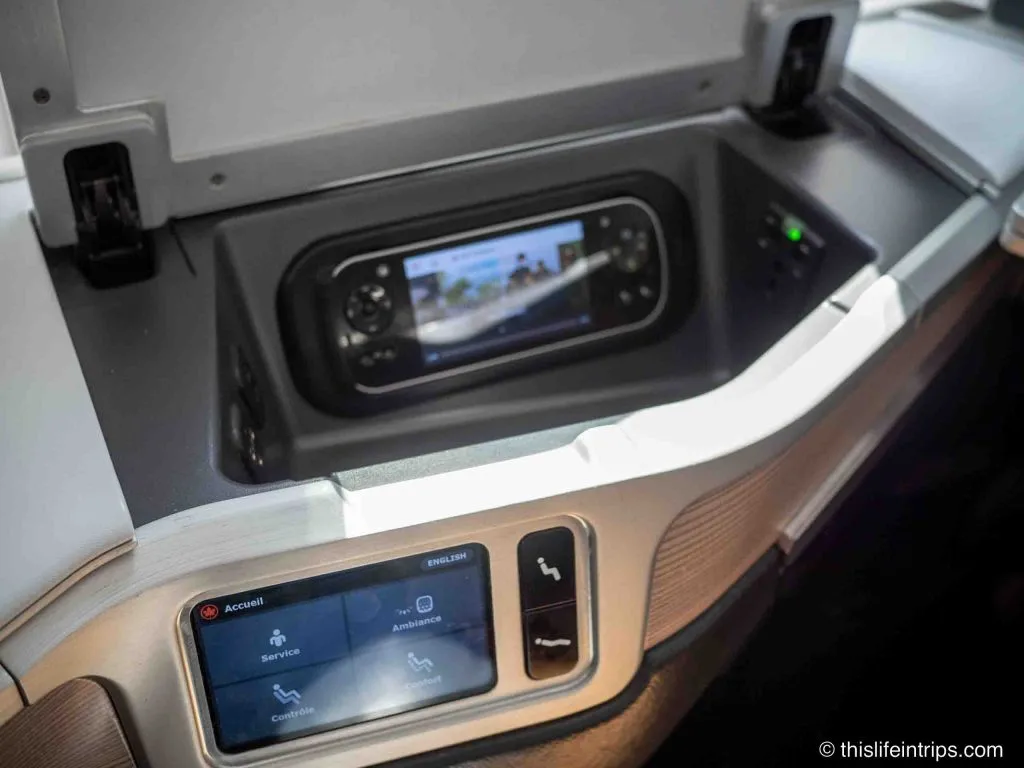
JAL SKY SUITE deserves serious consideration for its forward-facing design, privacy and distinctive onboard service, particularly when the available seats fit how you travel. Air Canada Signature can be compelling when the complete itinerary and eligible ground benefits work in its favour. Neither recommendation requires declaring the other airline inferior.
Before paying, confirm the actual seat product and the fare’s lounge eligibility, then look at the whole journey rather than the ocean crossing alone. The linked first-hand report adds useful detail about JAL’s storage and service. Our broader Air Canada comparison explains the step up from Premium Economy, while the report catalogue lets you compare more than one traveller’s experience.
Related flight reviews
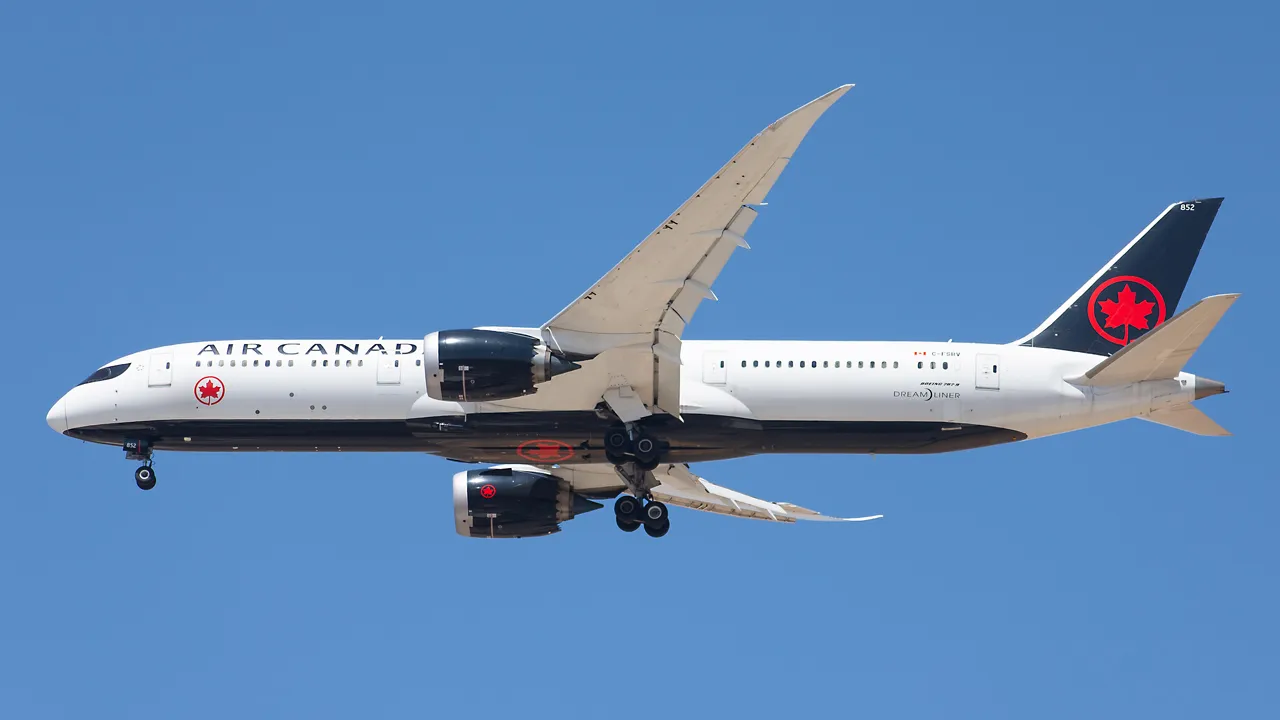 Air Canada
London Calgary
Boeing 787-9 · Business
Air Canada 787 Business Class Review: LHR to YYC (2026)
This Life in TripsRead reviewJapan AirlinesTokyo Vancouver
Boeing 787-8 · Business
Japan Airlines Business Class Sky Suite I on the 787 from Tokyo Narita to Vancouver
QUIRROWRead review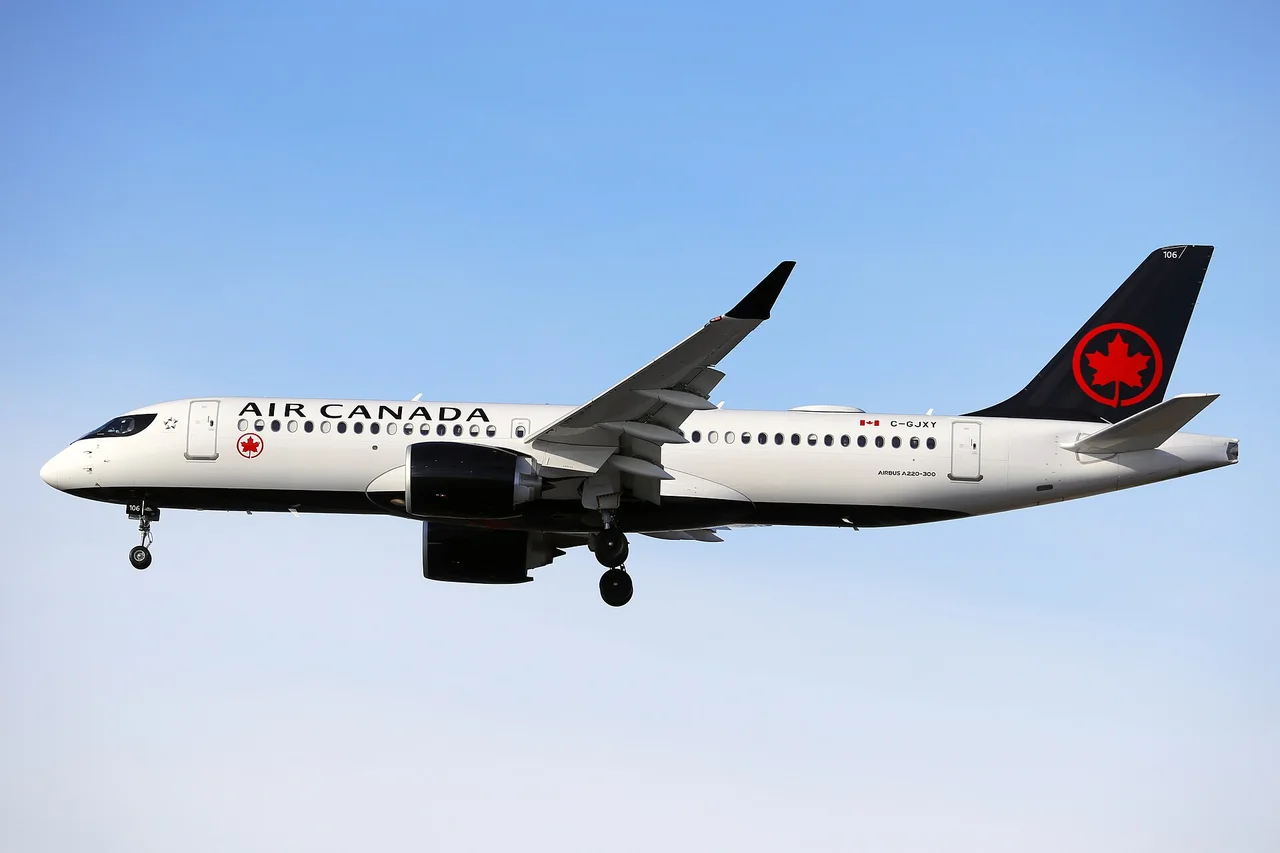 Air Canada
Montreal Los Angeles
Airbus A220 · Business