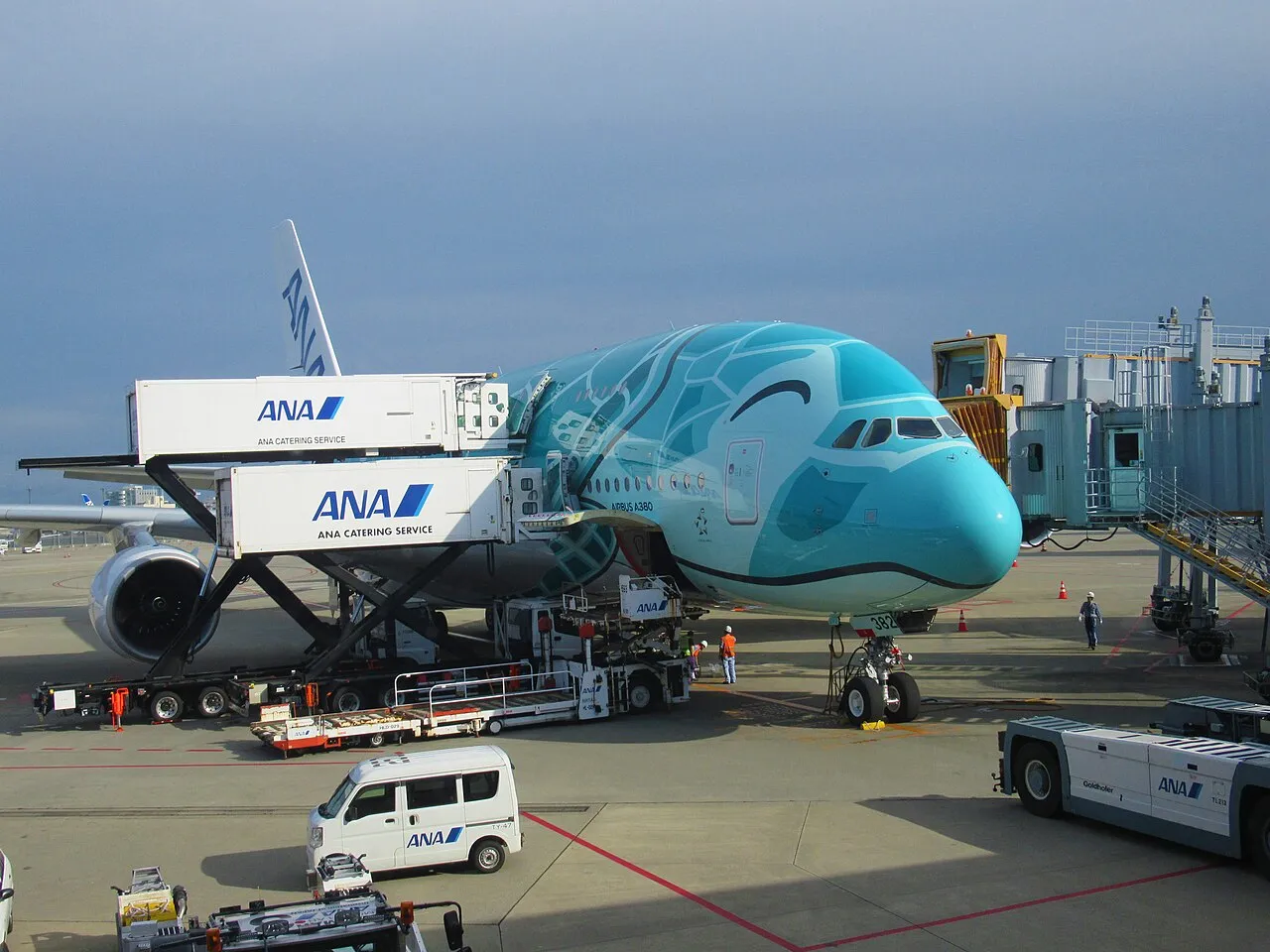
ANA Flying Honu Premium Economy vs Business: a family row or a flat bed?
For a Hawaii-based traveller heading to Japan, the meaningful upgrade is a different resting position—not just a larger number on a seat specification.
Flight reviews2
Choose Business if lying flat is the reason for paying more. Premium Economy can work better for a family of three who want one shared row block. Price the Honolulu–Tokyo and Tokyo–Honolulu directions separately before assuming that both need the same cabin.
01Three together, or direct aisle access for everyone?
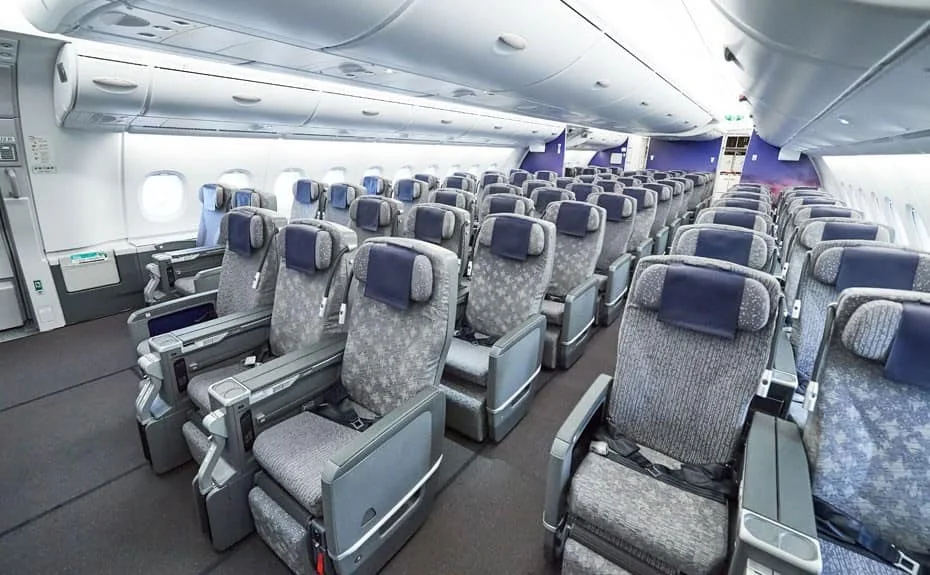
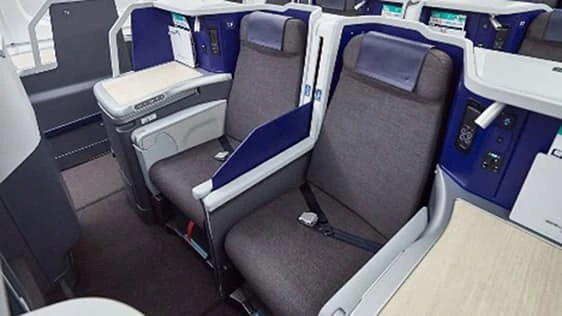
| Feature | Premium Economy | Business |
|---|---|---|
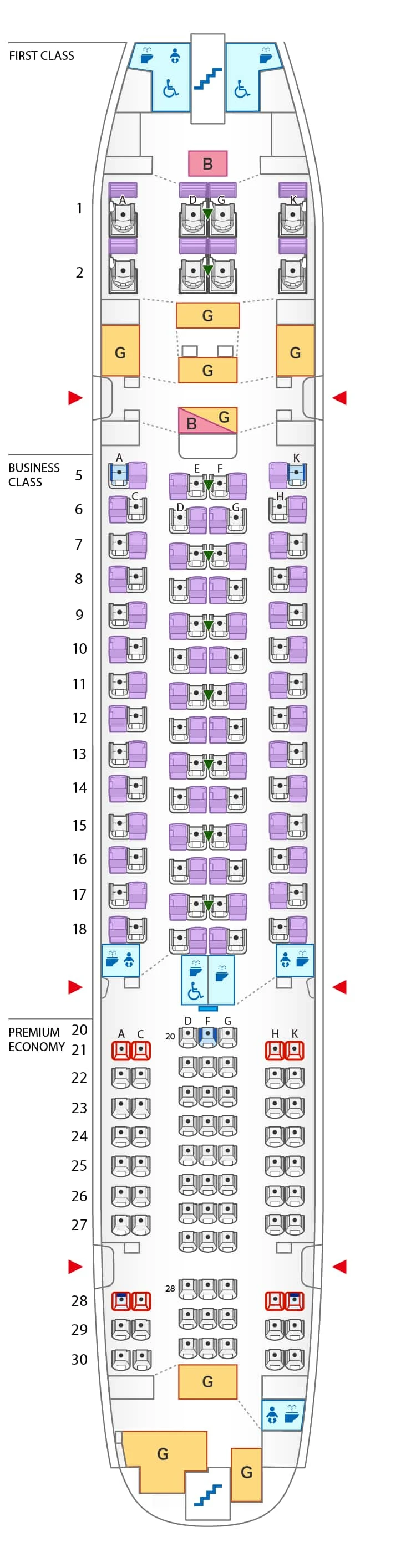
| Seats | 73; two-three-two | 56; staggered layout |
| Resting position | Recliner with leg support | Fully flat bed |
| Aisle access | Some passengers cross a neighbour | Direct access from every seat |
| Party of three | One centre block can work | A pair plus another seat, or three separate seats |
A parent helping a child with food may value proximity more than a bigger personal space. Premium Economy’s centre three are useful for that purpose, provided the seats are available together. The fixed armrests do not turn the row into a couch. For adults who get up independently, direct aisle access makes Business more convenient.
Even the Business centre seats are not interchangeable. The official map labels the closer centre pairs E/F on odd-numbered rows, with D/G on even rows. Check the layout rather than assuming any two central seats have the same conversational distance. A family booking three remaining Business seats may end up more separated than expected.
02The recliner cannot deliver the flat-bed benefit
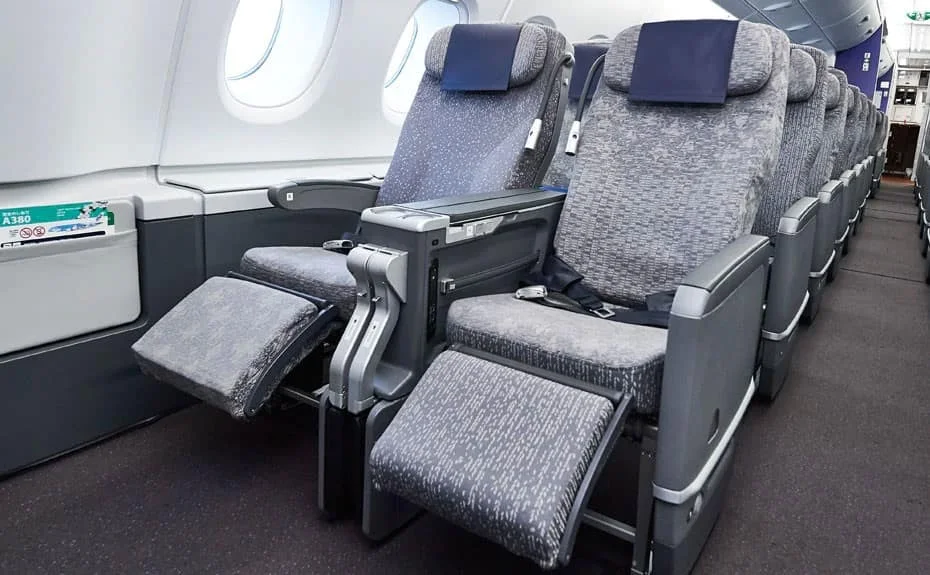
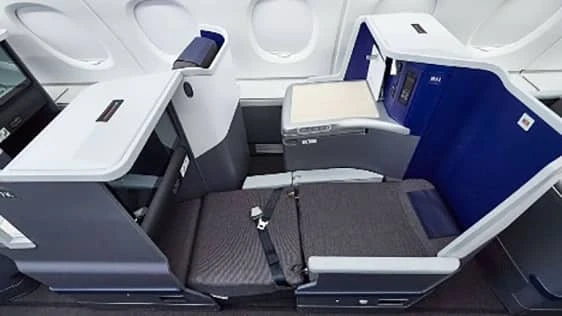
Premium Economy has approximately 38 inches of pitch, but pitch measures the spacing between seats, not the length of an empty space for your legs. Support under the calves can make reclining more comfortable. It does not remove the angle at the hips in the way a flat bed does.
For a Honolulu-origin Japan trip, consider the departure and arrival times of both directions. The Tokyo–Honolulu return commonly gives travellers an overnight rest opportunity, while the outbound journey can involve more waking time. Your own sleep schedule and plans after arrival matter more than a rule that the higher cabin is always necessary on the longer sector.
A useful test is simple: if a comfortable recliner still leaves you unable to sleep, Premium Economy may improve the journey without solving your main problem. If you expect to watch films and read, it can be enough. A successful night of sleep in someone else’s review is not a prediction for you.
03Personal workspace versus helping the person beside you
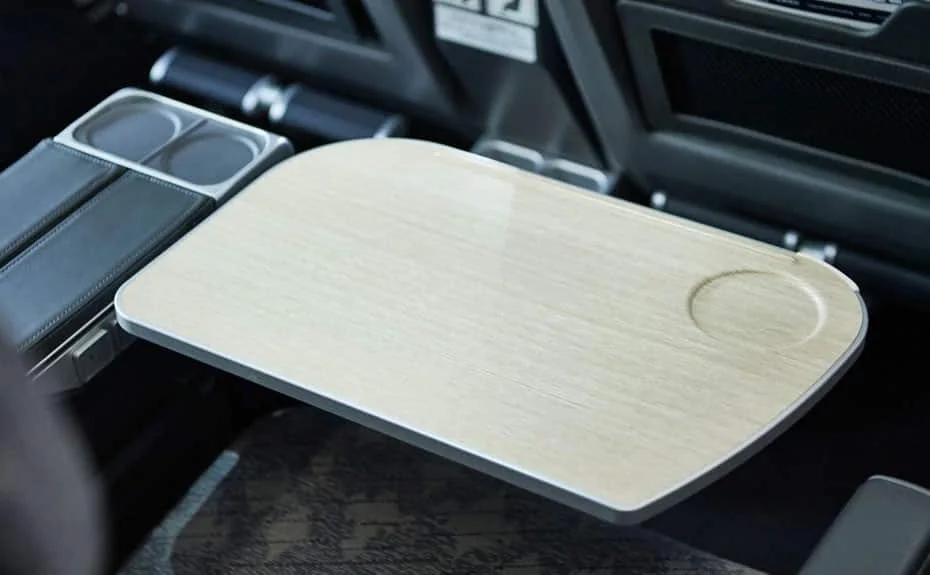
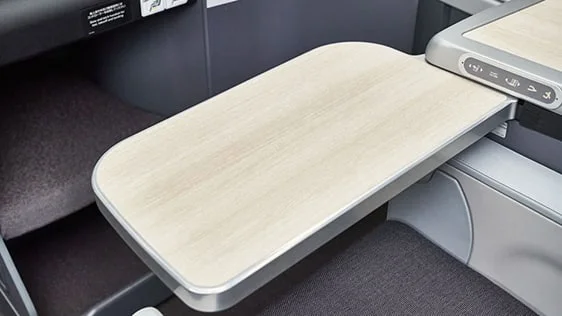
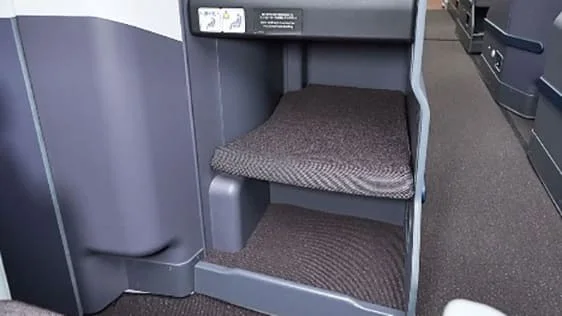
The practical benefit of the Business workspace is not only laptop use. When food arrives, a side surface provides somewhere for a phone, headphones or glasses. Premium Economy gives a family a closer shared arrangement, but each person’s meal occupies much of their immediate tabletop.
First-row Premium Economy has an 11.6-inch screen rather than the usual 15.6-inch screen. A bulkhead position therefore exchanges some aspects of the experience; it is not an automatic “best seat”. Look at the table and screen arrangement as well as the absence of a seat directly ahead.
Neo Li’s Honolulu–Tokyo inaugural review provides actual Premium Economy cabin and service photographs. Its special gifts are evidence of that inaugural flight, not standard benefits. Keishi Nukina’s charter report is useful for seat detail but describes a short Narita joyride, so its catering and duration should not be projected onto Honolulu service.
04A supplement becomes a family expense
Suppose the complete quote rises by US$500 per passenger when one sector moves to Business. For three people, that is US$1,500. If an otherwise equivalent quote adds the same amount for both sectors, the family difference becomes US$3,000. These are fictional inputs, not current fares. Compare the full ticket price, required seat choices, baggage and change conditions before deciding how much the bed itself is costing.
The choice can reverse with availability. Three adjacent Premium Economy seats may be more useful for a young family than three scattered Business seats. Two adults who mainly want to sleep can still obtain the central benefit of Business without finding a close pair. This comparison concerns ANA’s A380 Honolulu service, not an ANA nonstop from the US mainland to Hawaii.
Neo Li’s Honolulu–Tokyo Premium Economy photographs
Keishi Nukina’s cabin details from a short A380 charter
2 flight reviewsMore ANA A380 trip reports by cabinBrowse reviews