

Qantas vs Singapore Airlines Premium Economy: Australia–Singapore
A separate cabin can be a worthwhile middle ground. The best choice depends on the aircraft, the direction of travel and how much of the flight you expect to spend awake.
Flight reviews15
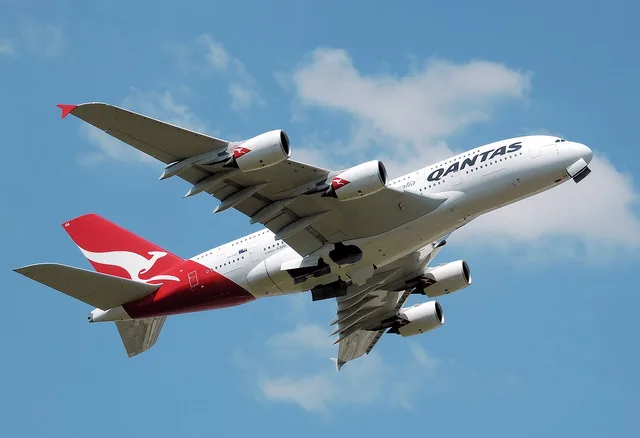
Qantas’s A380 is attractive for its seven-abreast Premium Economy cabin and window-side storage; Singapore Airlines is a strong alternative with a separate Premium Economy product on selected long-haul aircraft. First confirm that the actual flight offers the cabin: an extra-legroom economy seat is not an equivalent substitute.
01A useful upgrade, provided you are buying the right cabin
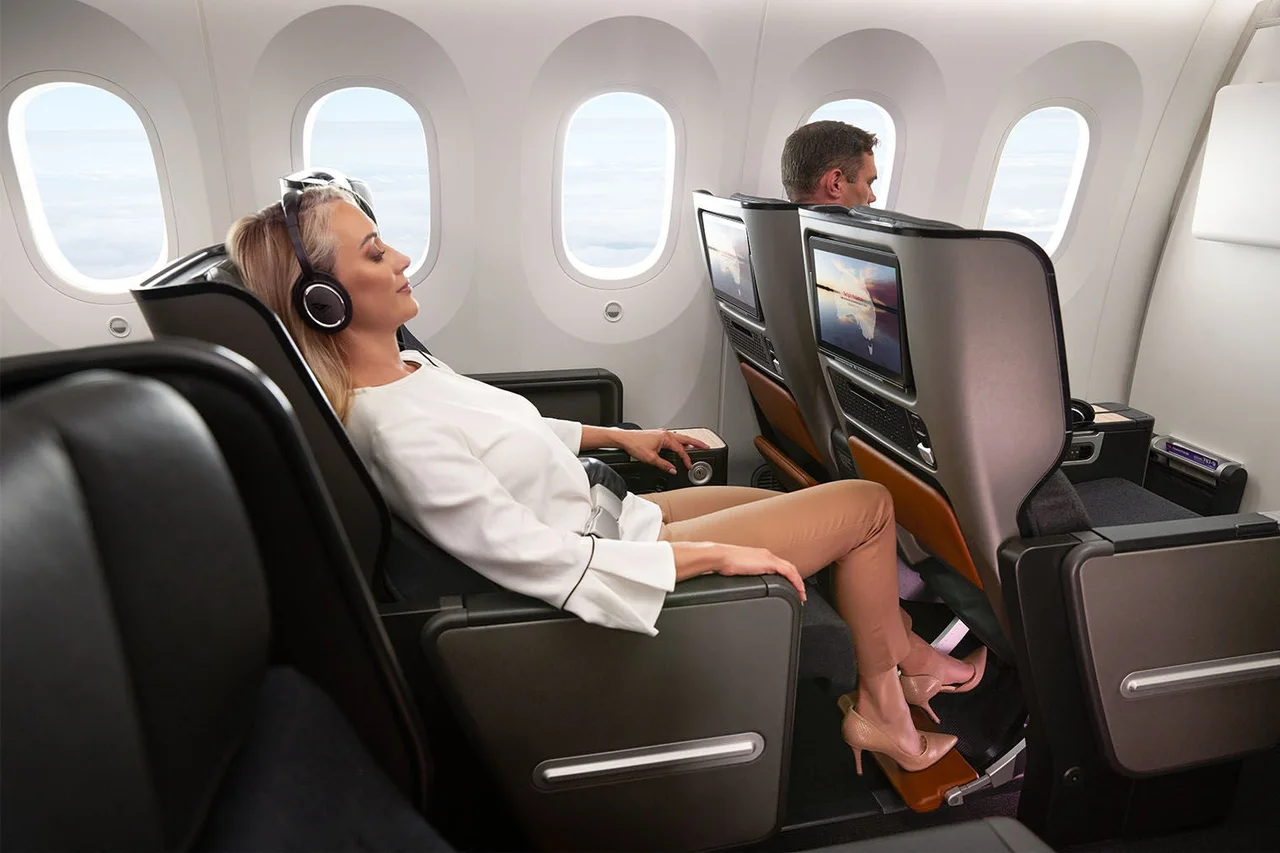
For travellers based in Sydney or Melbourne, Singapore is far enough away for a better seat to matter, but close enough that a flat bed can feel like an expensive indulgence. Premium Economy sits in that space between needs and budget. The difficulty is that the words in a booking result do not always describe comparable products.
This comparison concerns Qantas Premium Economy on the A380 and Singapore Airlines’ separate Premium Economy cabin on eligible long-haul aircraft. It does not treat a preferred economy seat, an extra-legroom row or a short connecting sector in economy as Premium Economy. Nor does it assume that every departure from Sydney or Melbourne offers both products.
| Priority | Qantas A380 | Singapore Airlines Premium Economy |
|---|---|---|
| A couple travelling together | Two-seat side pairs in a 2-3-2 cabin | Two-seat side pairs on the relevant widebody layout |
| A group of three | The centre block of three may suit | Check the actual aircraft’s centre block |
| A window seat with extra storage | A380 side bins are attractive, but not present at every window position | Storage depends on the aircraft and seat |
| Food selected before travel | Assess the service on your flight | Book the Cook is an attraction on eligible departures |
| A true bed for a short night | Premium Economy remains a recliner | Premium Economy remains a recliner |
Our recommendation is to choose the best combination of cabin, schedule and total fare, with the strongest preference given to the direction on which you need more comfort. A good daylight itinerary in Premium Economy can be more enjoyable than a very late departure chosen simply because the airline has a strong reputation.
Onboard videos1 video
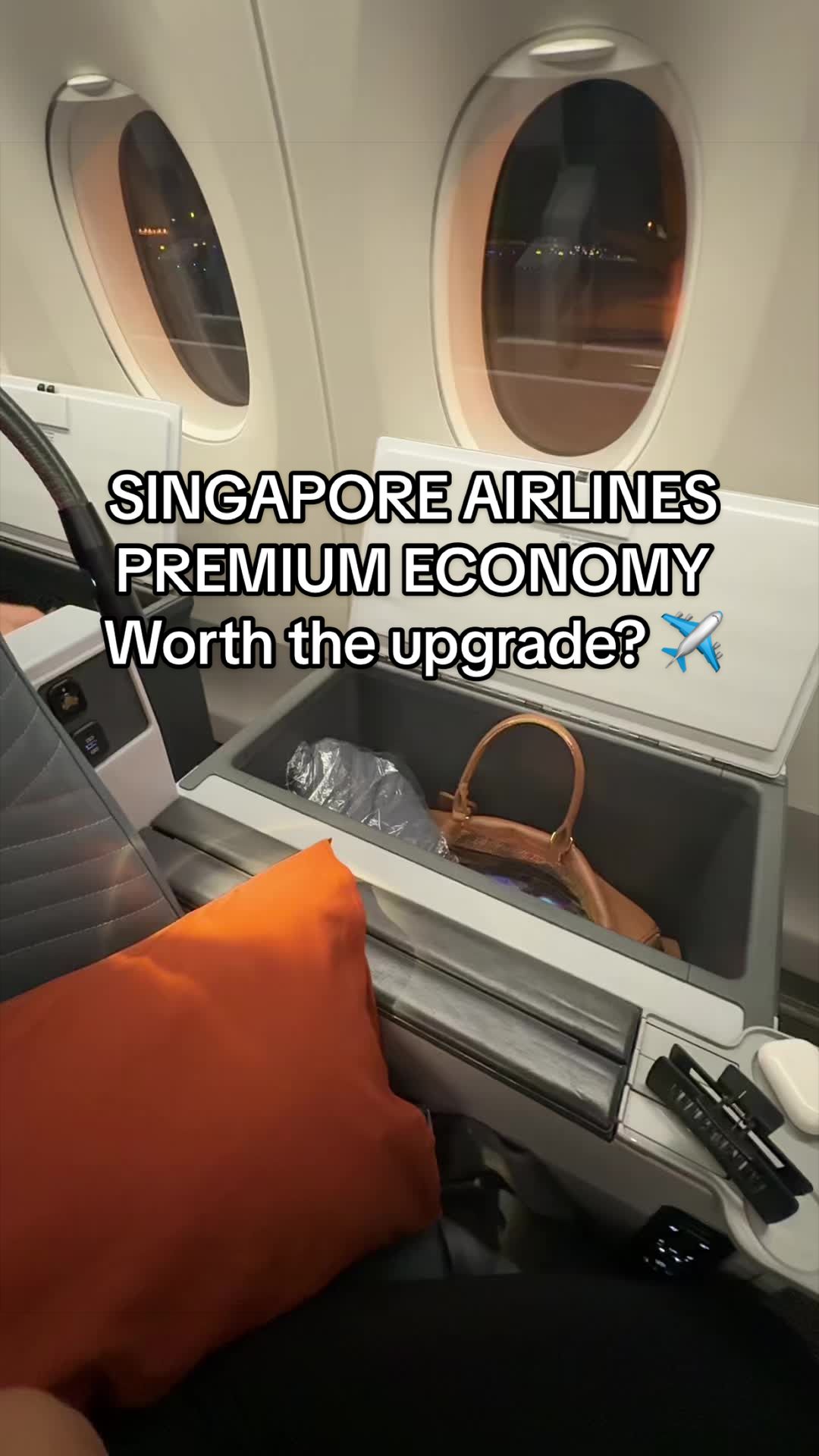
These first-hand clips show the seat and storage in use; the route and ticket conditions are discussed separately below.

03Seven abreast is useful information, not a comfort score
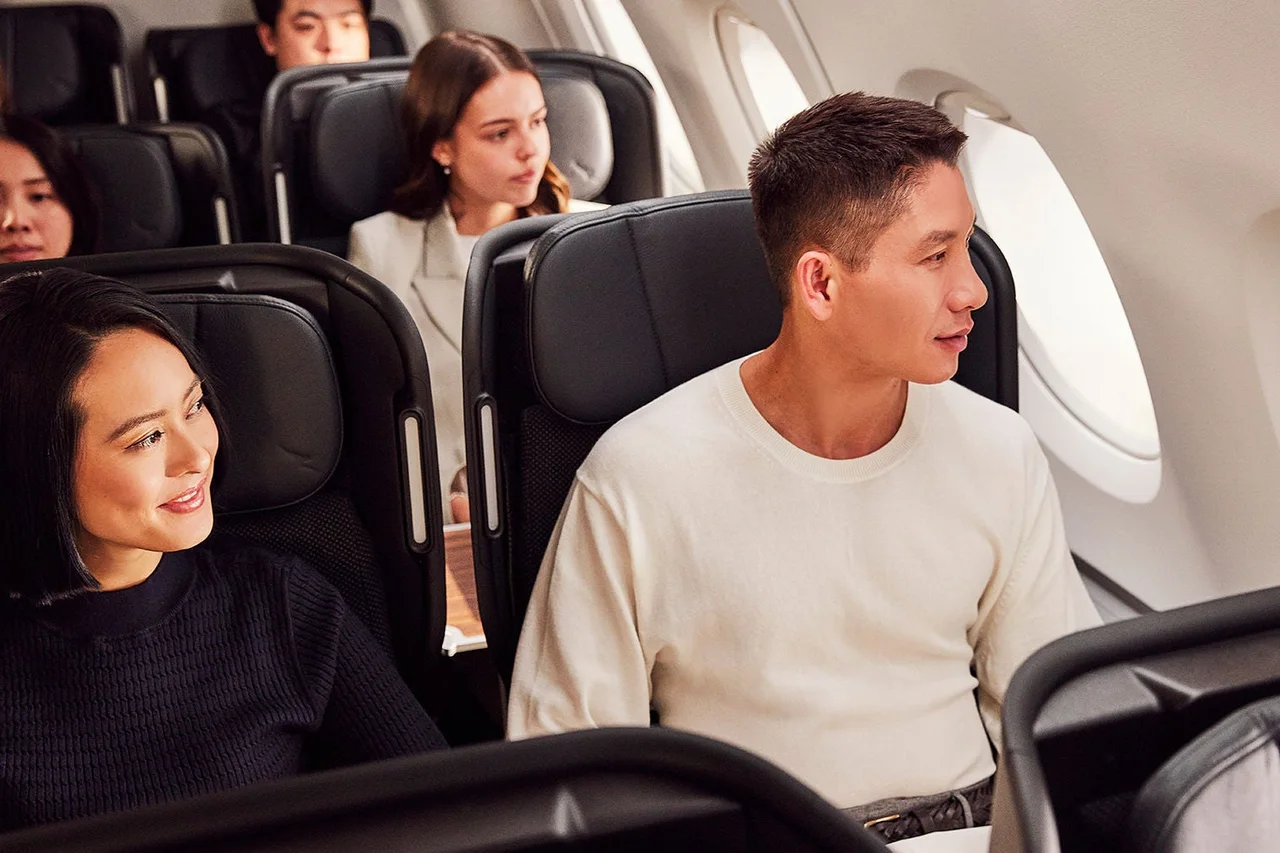
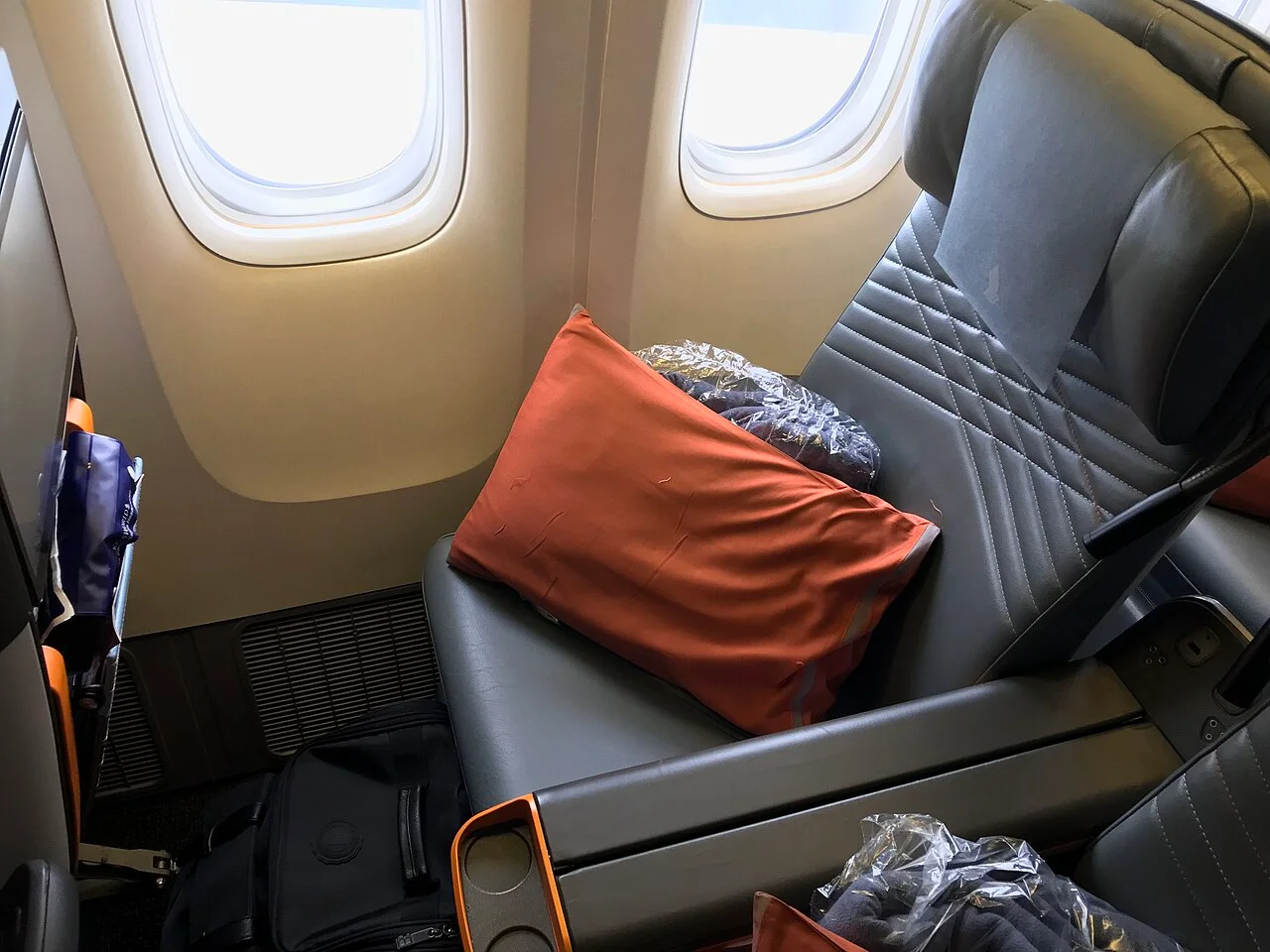

Qantas publishes 60 Premium Economy seats in a 2-3-2 layout on its A380, with 38 inches of pitch. Singapore Airlines’ familiar long-haul Premium Economy layout has two seats at each side and four in the centre. For a couple, both can provide a pair without a stranger immediately beside them; for three people, the centre section works differently.
Counting seats across the cabin does not by itself establish the width of a usable cushion. Airlines may describe width at different points, and armrest shapes matter. Likewise, seat pitch measures the spacing between rows rather than the clear distance between your knees and the seat ahead. Avoid treating a small published difference as a precise prediction of how your body will fit.
The first useful photograph is often a seat with the foot support deployed and the table in use. A broad armrest can give each passenger a defined space, but it also prevents the row from becoming one continuous bench. For a parent hoping a child can stretch across two seats, that physical arrangement matters more than the seat’s marketing description.
04The A380 window bins are an advantage with exceptions
The Alviator’s detailed A380 report shows why seat-specific photographs help. The author found the large side storage useful, but noted that some window positions near the rear did not have the same bins. The report also describes a mains socket shared between two seats. These are practical observations from that aircraft and trip, rather than a guarantee about every future departure.
For a daytime flight with a laptop, storage you can reach without standing up is valuable. A small bag can stay organised, and glasses or headphones are less likely to disappear beneath a blanket. On a night flight, easy access still helps, but a traveller may care more about the way the headrest and calfrest support a sleeping position.
Shanescape’s separate A380 account is worth pairing with that review because it describes the seat’s cradle-like movement and a flight delayed into the early morning. The same physical product can make a different impression when the meal begins well after the time you expected to be asleep. The schedule is part of the product you experience.
05Meal choice helps, but it does not create more sleep
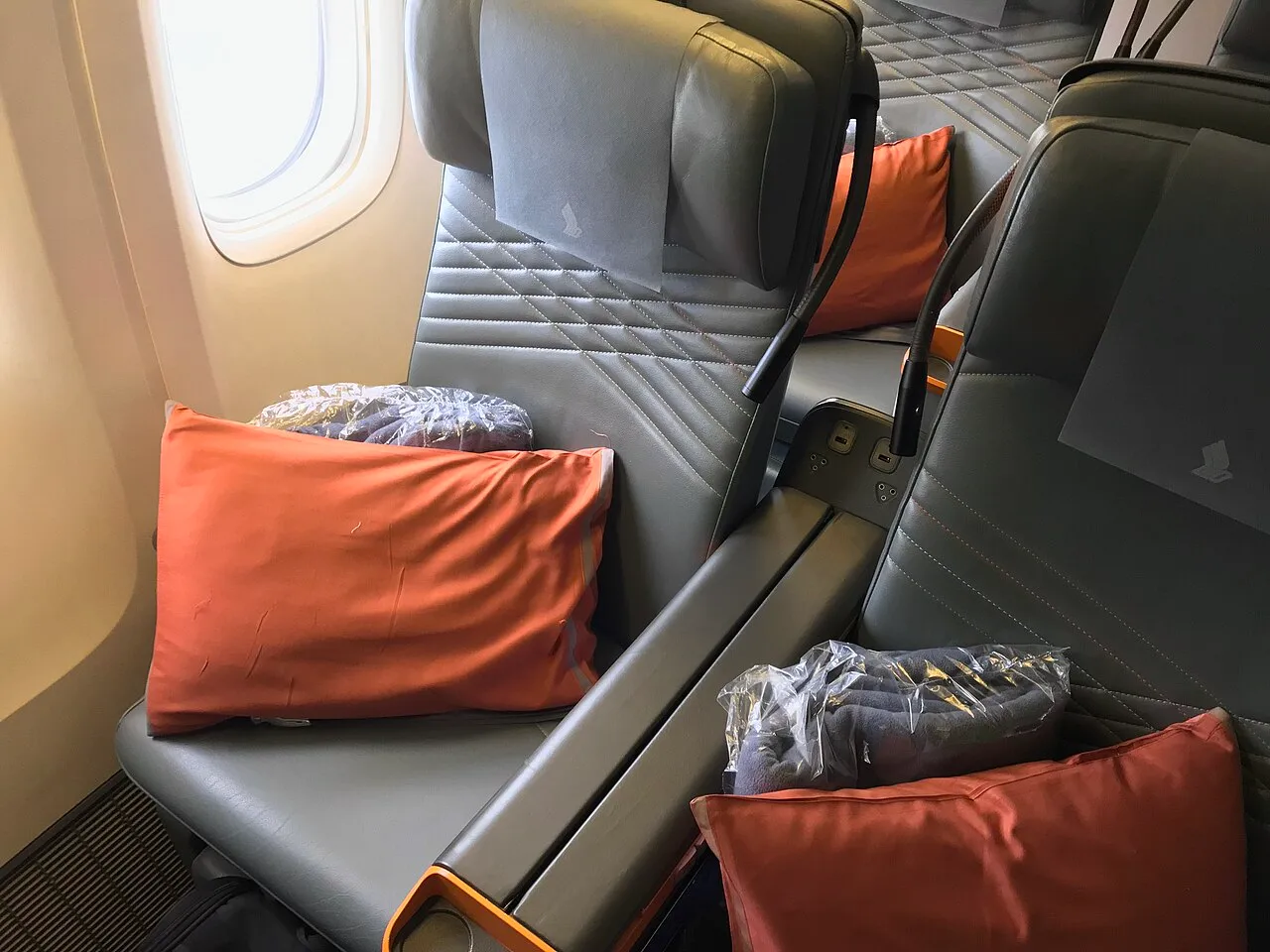
Singapore Airlines’ Premium Economy offer includes a wider recliner than economy, calf and foot support, and Book the Cook on eligible services. The ability to choose a main course ahead of time can be a real benefit if the meal is part of the occasion. It is less important if you plan to decline most of the service and sleep.
The airline announced a substantial Premium Economy dining refresh in 2024. That matters when reading older reports: a 2022 account of the meal presentation is evidence of that flight, not a current menu guide. FlyAlex’s Sydney–Singapore A380 review remains useful for its seat and storage photographs, while its catering observations need that date attached.
Neither airline turns Premium Economy into a flat bed. If the only reason for upgrading is a particular sleeping posture, it is worth being honest about what a recliner can and cannot do. An overnight flight before a demanding morning may justify pricing business class as a third option; a relaxed arrival day might make that additional expense unnecessary.
06Choose which direction deserves the extra money

Read the diagram as text
- Daytime meal plan
- 4.5 hours left for your own use
- Shorter meal plan
- 5.5 hours left
- Onward flight
- Price its cabin and timing separately
Australia–Singapore itineraries can place a daytime flight in one direction and a night flight in the other. Rather than assigning identical value to both, estimate how much of each sector you will spend reading, working, eating or trying to sleep. A larger seat is useful for all four, but not equally useful to every traveller.
| Activity | Daytime plan | Sleep-focused night plan |
|---|---|---|
| Settling in and preparation for landing | 1.5 hours | 1.5 hours |
| Meals and drinks | 2 hours | 1 hour |
| Time left for work, films or rest | 4.5 hours | 5.5 hours |
This is a planning example, not a published flight duration or an airline service timetable. Its purpose is to show that meal choices and interruptions use the same limited hours as sleep. A richer meal service may be something to enjoy on the outbound and something to shorten on the return.
For a Singapore stopover before Europe, also compare the onward sector. Paying extra for the Australia–Singapore leg while accepting an unsuitable seat or awkward connection on the much longer leg can be a poor allocation of the budget. Each sector should be labelled with its actual cabin, rather than allowing a single Premium Economy heading to describe the whole booking.
07A couple’s fare comparison in Australian dollars

Read the diagram as text
- Economy return
- A$2,200
- One direction in Premium
- A$3,300
- Premium return
- A$4,000
| Option | Per person return | Two-person total | Extra versus economy |
|---|---|---|---|
| Economy both ways | A$1,100 | A$2,200 | — |
| Premium Economy on one direction | A$1,650 | A$3,300 | A$1,100 |
| Premium Economy both ways | A$2,000 | A$4,000 | A$1,800 |
These are invented comparison figures, not current fares. In this example, upgrading both directions costs A$450 per person-sector, while upgrading one direction costs A$550. The one-way upgrade is less efficient per sector but leaves A$700 available for the rest of the holiday. It can still be the better purchase if only one direction needs the additional comfort.
A meaningful airline comparison uses the same dates, baggage, seat preferences and cancellation requirements. A cheaper fare that cannot accommodate the seats you want may not solve the problem you are paying to solve. A flexible fare can be useful, but its value belongs to the chance of changing the trip, not to the physical quality of the seat.
For couples, Qantas’s A380 is particularly appealing when the desired pair and useful storage are available at a sensible fare. Singapore Airlines deserves equal consideration when its schedule, eligible cabin and meal choice fit the journey better. If the remaining difference is mostly brand preference, the first-hand reports below are a better final check than a universal winner.
The Alviator: detailed Qantas A380 cabin review
Related flight reviews
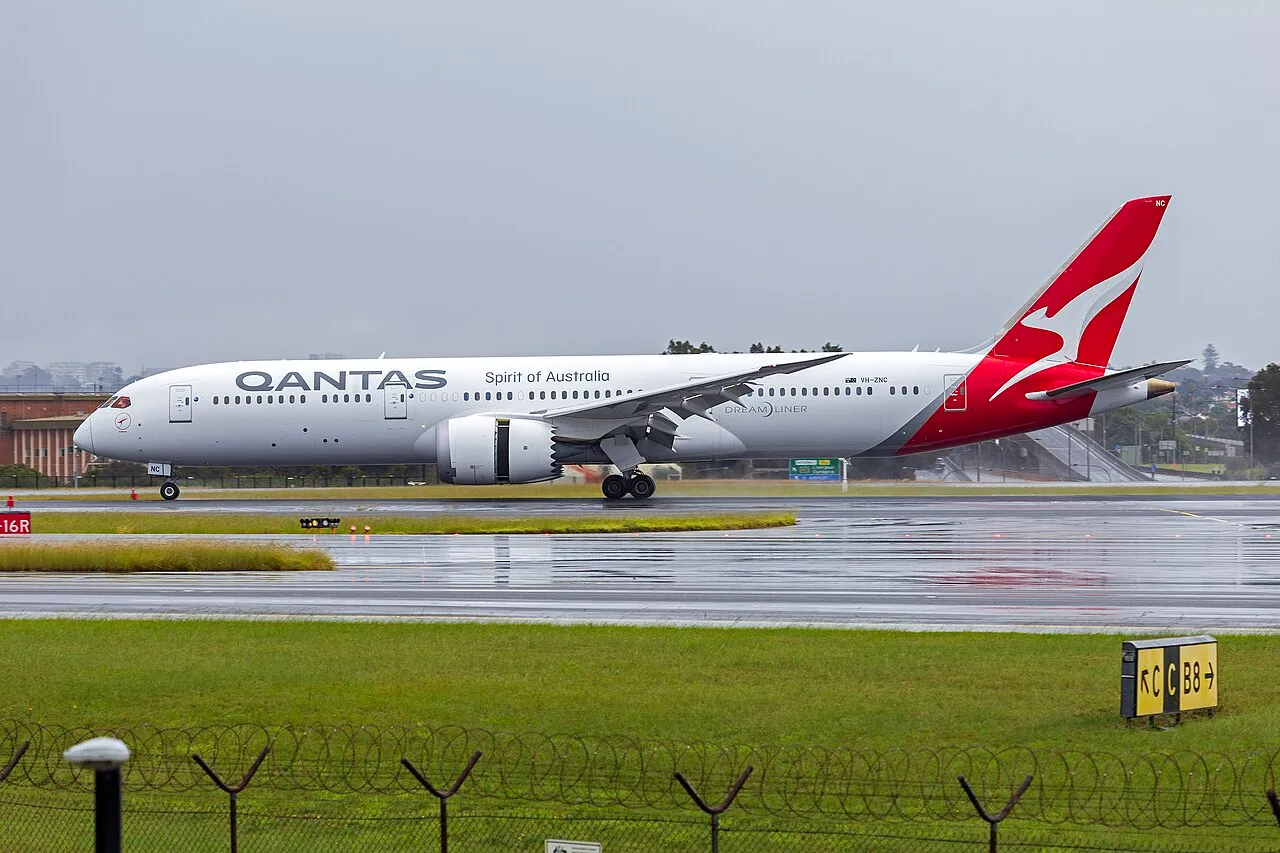 Qantas
London Perth
Boeing 787-9 · Premium economy
Flight Review: Qantas Premium Economy (Boeing 787-9 Dreamliner) from London to Perth
Travel While NerdyRead review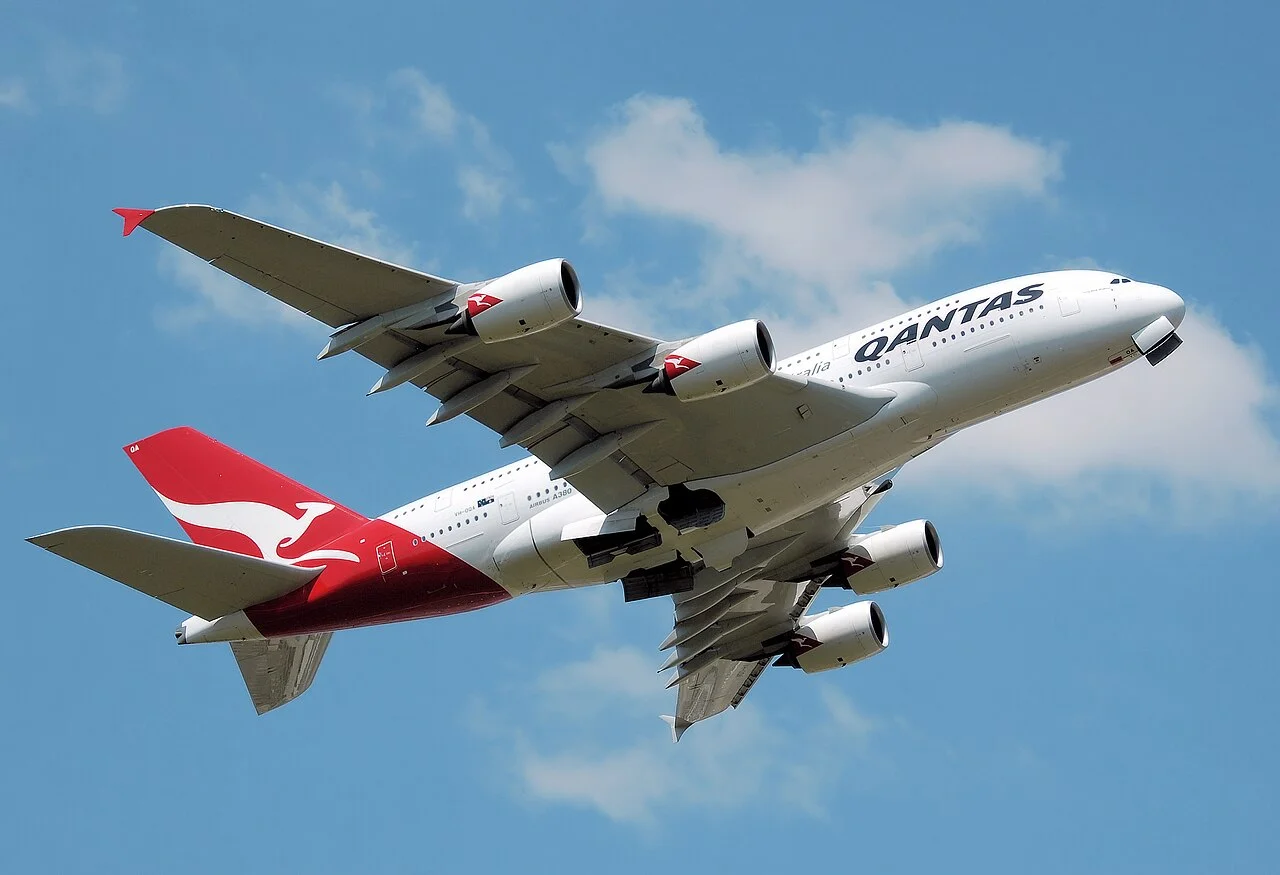 Qantas
Sydney Singapore
Airbus A380-800 · Premium economy
Qantas premium economy review – A380 from Sydney to Singapore
Head for PointsRead review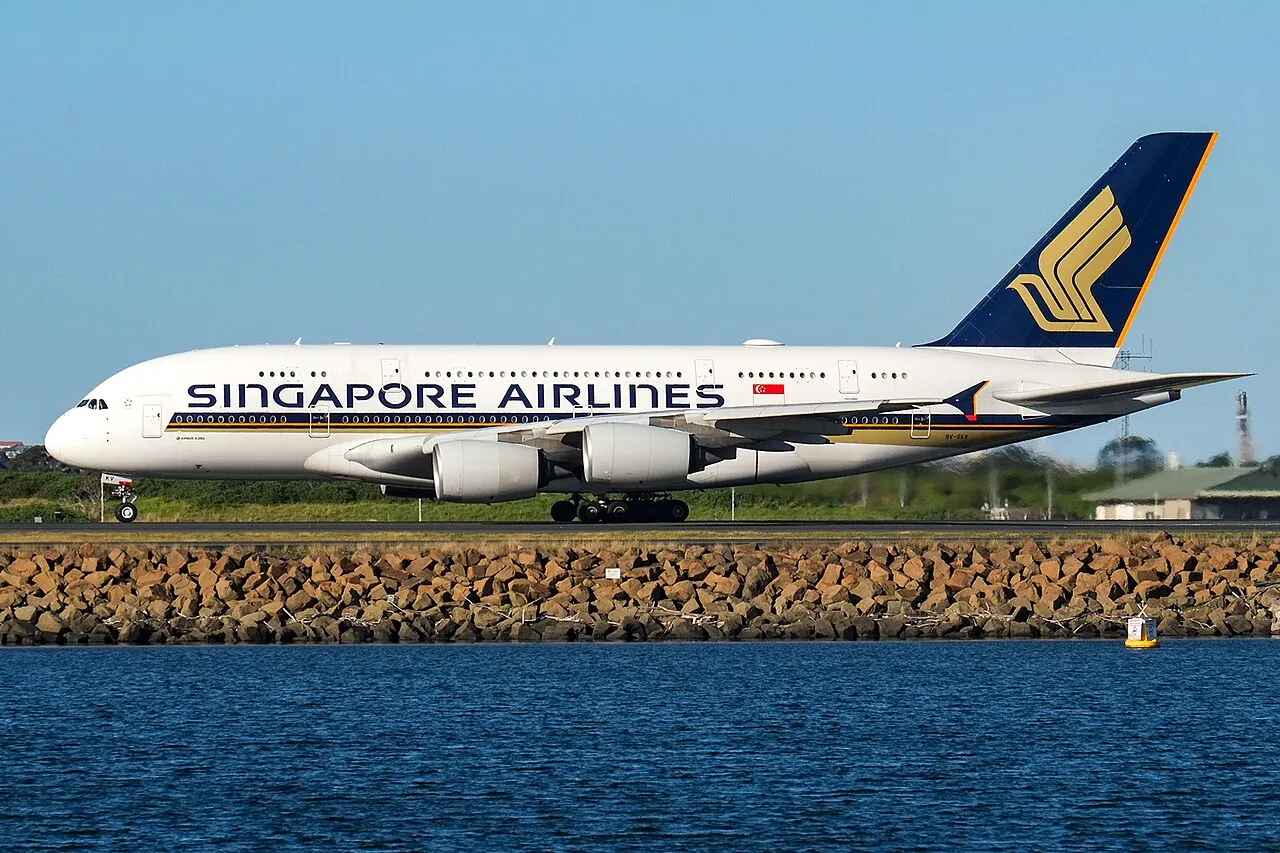 Singapore Airlines
Singapore Sydney
Airbus A380-800 · Premium economy