

Virgin Atlantic reward voucher: companion seat or upgrade?
The largest points saving is not always the best trip. A useful voucher comparison starts with the same passengers, flights and final cabin.
Flight reviews14
For two people who already hold eligible cash tickets, an upgrade quote is a sensible first option. If you are booking from scratch, compare it with a companion reward in the same final cabin. A voucher offsets points rather than the entire bill, so the winner depends on the fare you must buy, the remaining points and the cash charges.
01The trip comes first, the voucher second

Read the diagram as text
- Already booked
- Price the extra upgrade
- Starting from scratch
- Compare companion and upgrade totals
- Travelling solo
- No companion seat needed to upgrade
A Virgin reward voucher can make a better cabin affordable, but it can also tempt you into an expensive booking you would never otherwise have considered. This guide is for UK travellers who already have a voucher and want to choose how to use it. It is not a reason to spend more on a credit card, buy points speculatively or chase a particular redemption value.
The most revealing comparison is between two ways to put the same people on the same flights in the same cabin. Comparing an Upper Class companion booking with a Premium upgrade is useful for deciding what holiday you want, but it does not prove that one method is a cheaper way to obtain the same product. Our worked example keeps that distinction explicit.
| Your situation | Start with | Why |
|---|---|---|
| Two eligible cash tickets already booked | An upgrade quote for both passengers | The original fare is already part of the trip |
| Two people booking from scratch | Companion and upgrade quotes | A cheap starting fare may change the result |
| One person travelling alone | An upgrade quote | No second passenger is needed to enjoy the improvement |
| Voucher approaching expiry | A trip you genuinely want before the deadline | Unused value is better than an unnecessary holiday bill |
The attraction is different for different travellers. A couple might want two beds on an overnight crossing, while a solo traveller may be perfectly happy with Premium on a daytime flight. Deciding that first protects the comparison from an impressive-looking points figure.
Onboard videos1 video
These first-hand clips show the seat and storage in use; the route and ticket conditions are discussed separately below.


03The limits that matter to the calculation
The current voucher limit is 75,000 points for Red members or 150,000 for Silver and Gold, based on status when redeemed. Points above the limit come from your balance; unused voucher value is not returned. Taxes, fees and charges remain payable. These limits are ceilings, not a promise that your chosen flight will cost that much.
A voucher can cover a companion or an upgrade for one person on a return trip, or two people on one-way flights booked together. It does not automatically upgrade two people on a return journey. Economy Light is excluded from voucher upgrades. The current product is for Virgin-operated flights booked directly, rather than a blanket benefit on partner-operated services.
For vouchers issued from 30 October 2024, the validity period is 24 months and the outbound must be flown by expiry. Booking before that date is not enough. Virgin currently handles redemption through its Customer Centre; the account’s voucher record and a written quote are the practical starting points.

04Two people, one flight, the same final cabin

Read the diagram as text
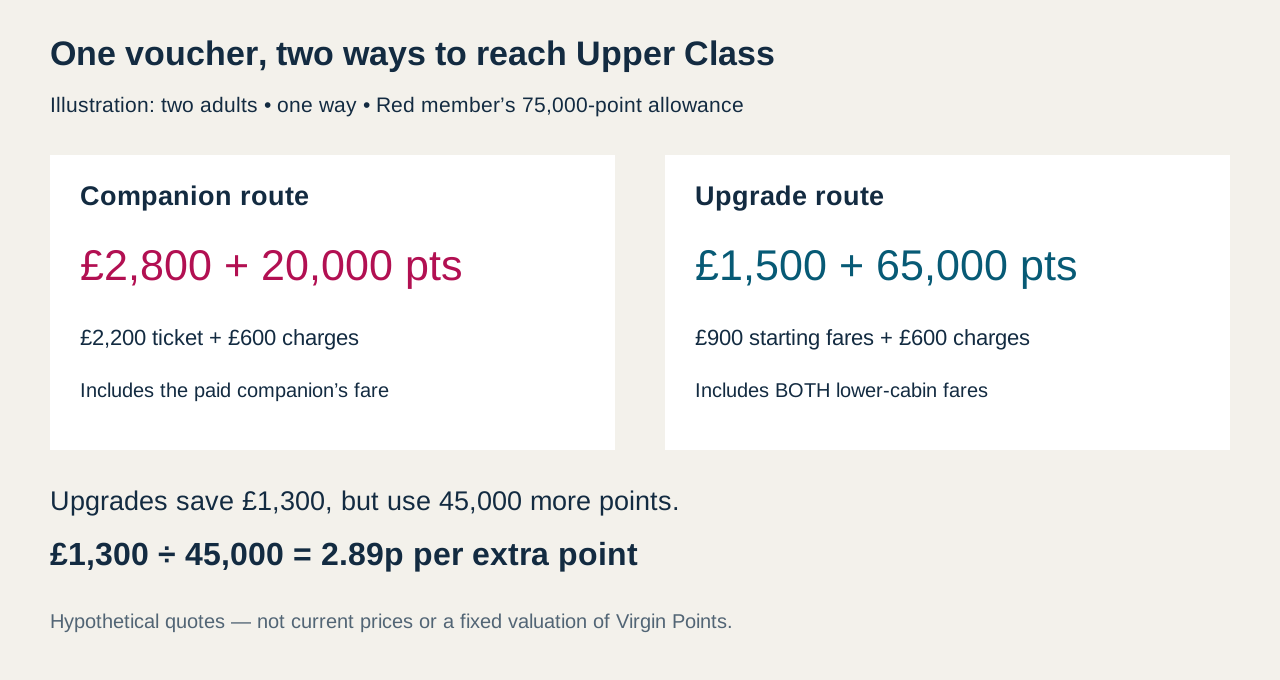
- Companion route
- £2,800 + 20,000 points
- Upgrade route
- £1,500 + 65,000 points
- Trade-off
- £1,300 for 45,000 points: 2.89p each
Imagine two adults who want Upper Class on the same one-way flight and have one Red-tier voucher. They have not yet bought tickets. The following numbers are deliberately hypothetical, not live fares, Saver rates or a promise of availability. Their purpose is to show why a lower points balance does not always mean a lower overall cost.
| Component | Companion route | Upgrade route |
|---|---|---|
| Cash tickets required before using the voucher | One Upper Class ticket: £2,200 | Two eligible lower-cabin tickets: £450 each |
| Points quoted before the voucher | Companion reward: 95,000 | Two upgrades: 70,000 each |
| Voucher points applied | 75,000 | 75,000 across the two upgrades |
| Points still required | 20,000 | 65,000 |
| Additional taxes, fees and charges in the quote | £600 | £300 per person |
| Total cash for both people | £2,800 | £1,500 |
The upgrade route saves £1,300 in cash but uses 45,000 more points. The break-even value is therefore £1,300 divided by 45,000: approximately 2.89 pence per additional point. If keeping those points is worth more than that to you for a realistic alternative trip, the companion quote may be preferable. If not, the upgrade quote uses fewer pounds to reach the same cabin.
This is a personal trade-off, not an assertion that Virgin Points have a fixed cash value. Someone with a large balance and limited travel dates may prefer to spend points now. Someone saving for another confirmed family journey may value flexibility more highly. Neither needs to turn the maximum voucher allowance into a target.
The example also explains why the original ticket must remain in the arithmetic. Showing only the post-voucher upgrade payment would make the second option look like a £600 flight, when the couple first had to buy £900 of tickets. Conversely, adding a fare already paid to an incremental upgrade decision can obscure the question the traveller is actually facing.
05A cash ticket and a reward ticket start from different calculations

Read the diagram as text
- Reward ticket
- New price less original points
- Cash / Points Plus Money
- Deduct original cabin’s maximum Saver price
- Both methods
- Request the separate cash adjustment
For an upgrade more than 24 hours before departure, Virgin’s published method distinguishes the original booking. A reward ticket generally uses the new cabin’s points price less the points paid for the original seat. A cash or Points Plus Money booking instead deducts the maximum Saver reward price for the original cabin. The cash adjustment is quoted separately, including the relevant carrier-charge deduction.
That makes it unsafe to calculate a cash-ticket upgrade by subtracting the cheapest reward seat you happened to find online. It is also unsafe to assume that paying more for the original cash fare automatically reduces the points required. The useful request is a complete quote for your booking, passenger count and flight, with the voucher applied.
If you already hold two non-refundable Premium tickets, the relevant decision may be whether the additional upgrade cost is worth two beds on the overnight leg. It is not necessarily whether that itinerary was the cheapest way to buy Upper Class from the beginning. Treating an existing booking honestly avoids both double-counting and pretending that money already spent can be recovered.
06Leaving voucher value unused can be the sensible choice
Suppose a voucher covers a 50,000-point upgrade and has 25,000 points of unused capacity. A different flight would consume the whole 75,000 but requires a £180 airport hotel and a less convenient departure. Using all the allowance has not saved you an extra £180. It has created a new expense to consume a benefit that was never cash in the first place.
The same logic applies to a Silver or Gold member with a larger cap. A cheaper redemption that fits the journey can be better than a costly Upper Class date chosen solely to use the allowance. Compare the alternative you would genuinely book, rather than the most expensive ticket the voucher might help obtain.
Two people travelling return should also price the unupgraded sectors explicitly. A voucher used for two outbound upgrades leaves the return to be funded separately. That can be an excellent arrangement if the outbound is overnight and the return is daytime, but the total holiday bill must include both directions.
07Premium may be enough for the daytime journey
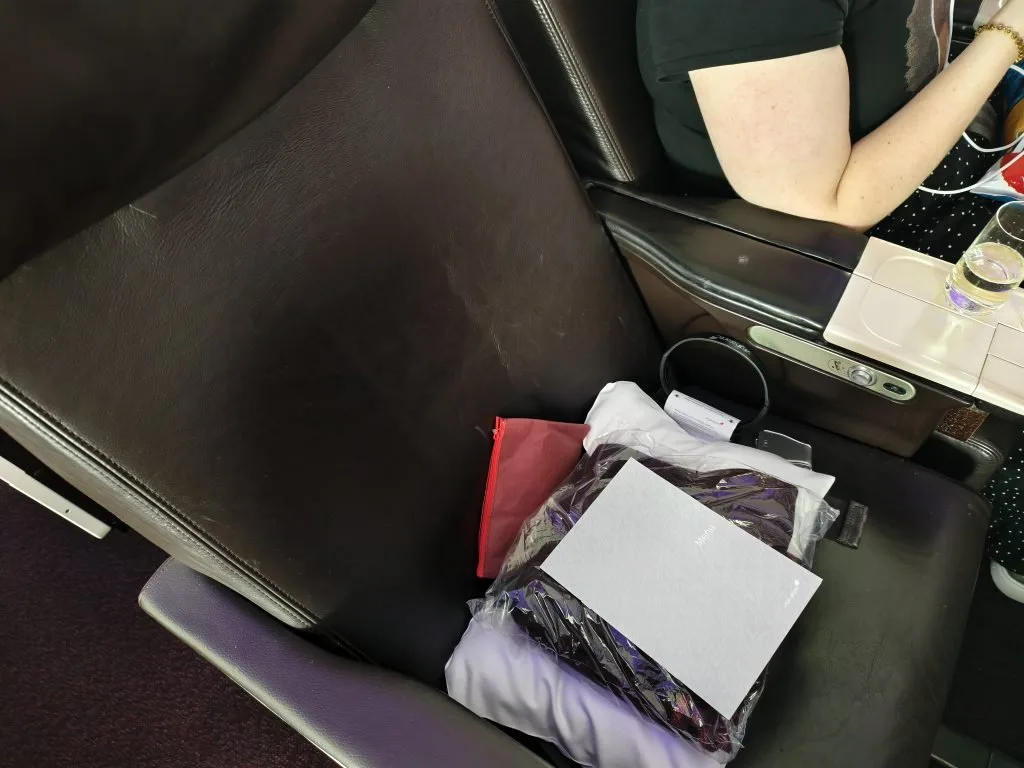
A voucher does not erase the difference between a recliner and a bed. On a daytime Atlantic crossing, Premium can offer a comfortable place to read, eat and work without paying for a flat surface you will barely use. On an overnight flight before an important first day, Upper Class may have much greater practical value.
Frequent Miler’s London–New York report is useful here: the author enjoyed the Premium experience while still distinguishing it from a flat-bed business cabin. Your Mileage May Vary’s older-A330 report puts more weight on the seat and airport experience than the main meal. Together they are a reminder to price the improvement you want, rather than a generic notion of luxury.
Our recommendation is to request the companion and upgrade totals before committing to an eligible starting fare. When the quotes arrive, choose the journey that fits your cash budget, points balance and preferred cabin on the sectors that matter most. The voucher should improve that trip, rather than determine where and when you travel.
Related flight reviews
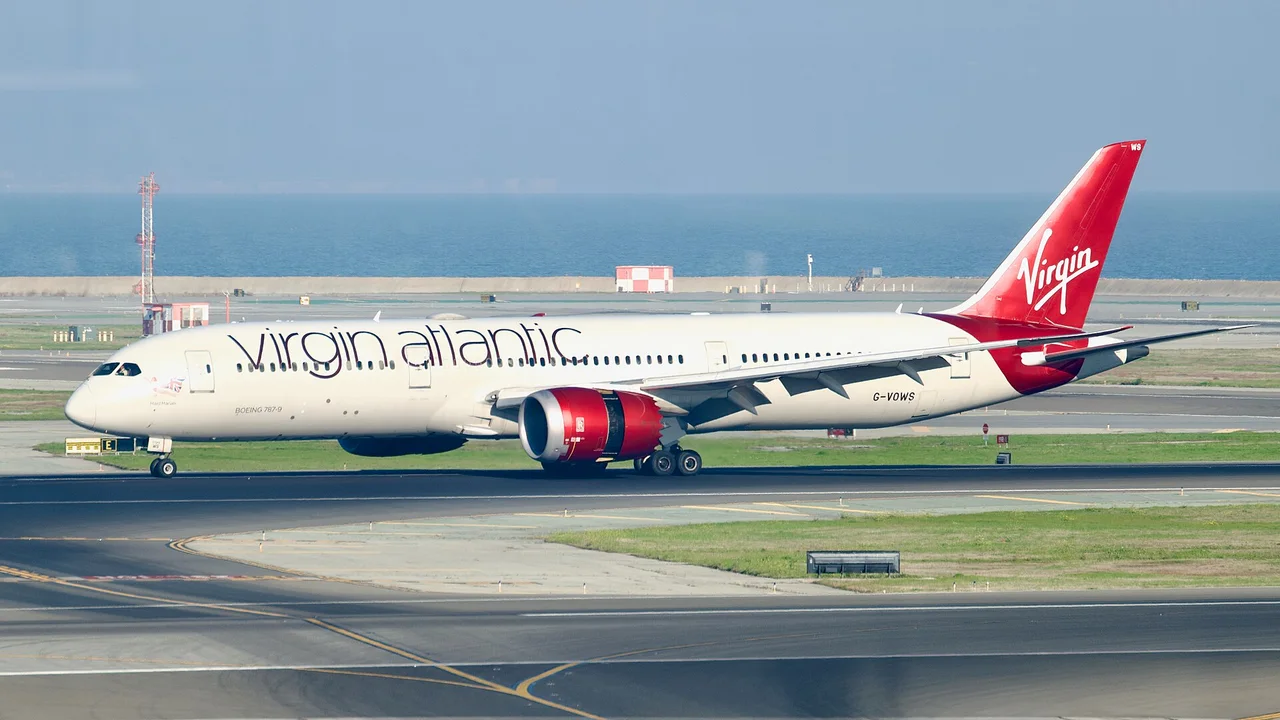 Virgin Atlantic
Seoul London
Boeing 787 · Premium economy
Virgin Atlantic Premium review – Boeing 787 from Seoul to London
Head for PointsRead review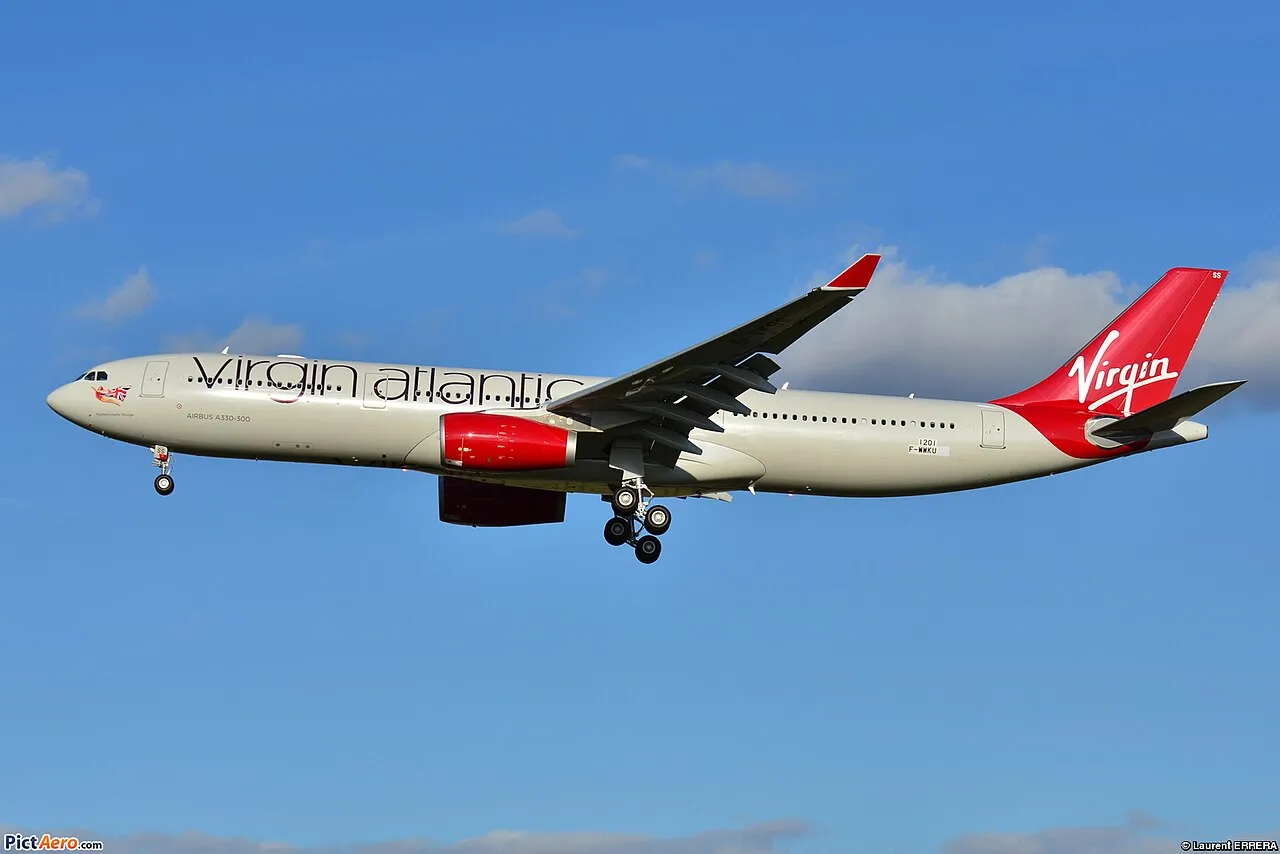 Virgin Atlantic
London Orlando
Airbus A330 · Premium economy
Virgin Atlantic Premium Economy (LHR–MCO) Review: Worth Paying For?
Your Mileage May VaryRead review Virgin Atlantic
London New York
Airbus A350-1000 · Business